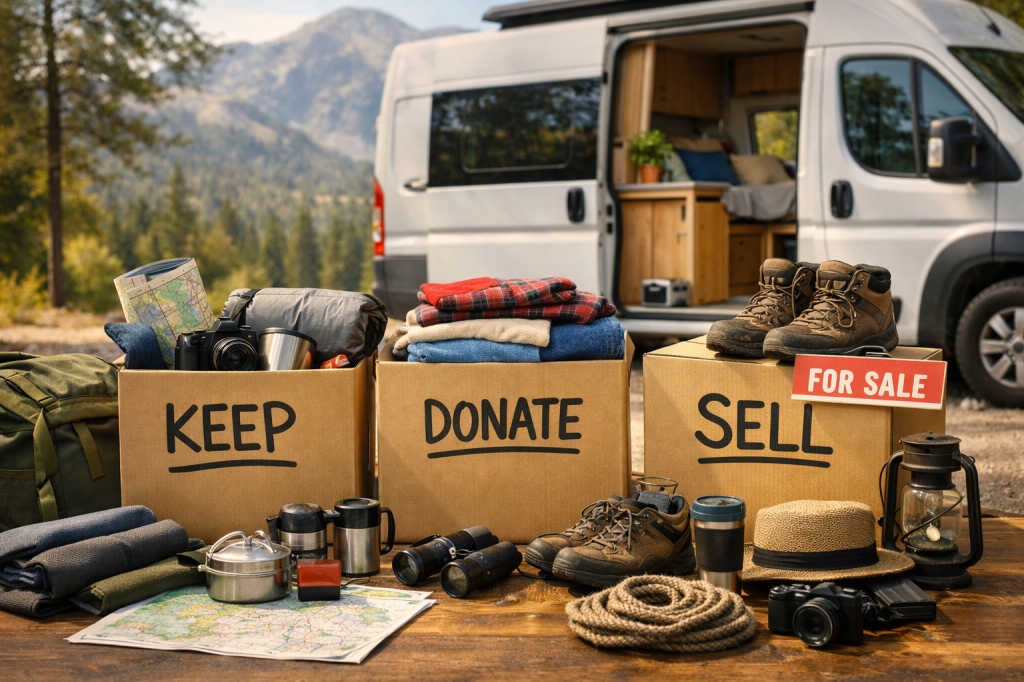
One of the biggest transitions before starting life on the road is not choosing a vehicle or planning a route.
It is letting go of your stuff.
Downsizing for vehicle living is more than clearing out closets or selling furniture. It is about separating your identity from your possessions and deciding what truly deserves space in your next chapter.
For many people, this is the hardest part of the process.
When I started preparing for life on the road, I assumed the downsizing step would be easy. I had already backpacked through Europe and lived abroad, so I thought I knew how to pack light.
But this time felt different.
I was not packing for a temporary trip. I was leaving behind a stable life without a clear destination. As I began sorting my belongings, the “maybe” pile quickly became the largest one. Books I loved. Clothes I had not worn in years. Random objects that carried memories.
Letting go turned out to be far more emotional than logistical.
Downsizing Is More Emotional Than Practical
Many future nomads expect downsizing to be a simple process of decluttering.
In reality, it often becomes a deeper reflection on identity and priorities.
Our belongings are rarely just objects. They represent memories, milestones, relationships, and versions of ourselves that once felt important.
That is why downsizing can feel overwhelming. You are not just deciding what to pack. You are deciding what version of your life to carry forward.
The key is recognizing that the goal is not minimalism for its own sake. The goal is creating space for mobility, flexibility, and freedom.
Start the Downsizing Process Early
One of the most helpful strategies is simply starting earlier than you think you need to.
Instead of attempting a massive purge a few weeks before departure, break the process into manageable pieces.
Focus on:
- One room at a time
- One shelf or drawer at a time
- One category of belongings at a time
This approach reduces emotional overwhelm and helps you build momentum. Small decisions compound quickly.
Many people also find it helpful to sort by category instead of room. For example, gather all clothing together or all kitchen items together. Seeing everything in one place often reveals duplicates and items you forgot you even owned.
Use Clear Sorting Categories
A simple system can help keep the process moving forward.
Assign every item to one of these categories:
- Keep
- Sell
- Donate
- Trash / recycle
- Store
Try to avoid creating a large “maybe” pile. When you feel stuck, ask yourself a simple question:
Would I buy this again today?
If the answer is no, it may be time to let it go.
Start With Easy Wins
The easiest way to build momentum is by starting with items that require little emotional decision-making.
Examples include:
- Expired toiletries
- Duplicate kitchen tools
- Worn clothing
- Old chargers and electronics
- Broken or unused gear
These quick decisions create visible progress and make the harder categories feel less intimidating.
Handling Sentimental Items
Sentimental belongings are often the hardest part of downsizing.
These might include:
- Books with personal meaning
- Awards or achievements
- Family heirlooms
- Gifts from loved ones
- Old photos and letters
Instead of keeping everything, consider a few alternatives:
- Take photos of items before letting them go
- Keep a small “memory box”
- Store a limited number of items with family
- Write down the story behind an object
This allows you to preserve the memory without carrying the physical item.
What to Do With the Things You Let Go
There are several ways to responsibly part with belongings.
Sell
Selling items can help recover some money before your trip.
Good candidates include:
- Furniture
- Electronics
- Outdoor gear
- Tools
- Quality clothing
Popular platforms include Facebook Marketplace, Craigslist, eBay, and local garage sales.
Donate
When resale is not worth the effort, donating can be deeply rewarding.
Thrift stores, shelters, and community organizations often welcome useful items. Community exchange groups like Buy Nothing can also connect your belongings with people who need them.
Store (With Limits)
Some belongings may feel too meaningful to let go immediately.
In these cases, consider storing a small number of items such as:
- Important documents
- Family heirlooms
- A few sentimental keepsakes
The key is setting limits. Storage should support the transition, not delay decisions indefinitely.
Downsizing Is an Ongoing Process
One lesson many nomads learn quickly is that downsizing does not end when you hit the road.
A traveler I met at an RV park in New Mexico told me she had packed far more than she needed. She brought extra bedding, formal dishes, and kitchen appliances she thought she might use.
Two months later, most of those items sat untouched.
Eventually she began giving things away, donating others, and sending sentimental items home. Each time she removed something, her living space felt lighter and easier to manage.
That experience is incredibly common.
The road naturally teaches you what you actually use.


Leave a Reply