- Monday, March 30 – Wednesday, April 1, 2026 — Zero Days (0 Miles)
- Thursday, April 2, 2026 — Mile 209.5 to 219.5
- Friday, April 3, 2026 — Mile 219.5 to 239.9
Monday, March 30 – Wednesday, April 1, 2026 — Zero Days (0 Miles)
Monday through Wednesday were back to work days at Thousand Trails Palm Springs, settling into the now familiar rhythm of balancing trail life with a full-time schedule.
After several physically demanding days on trail, the downtime was welcome.
Evenings were simple. I spent time relaxing, watching TV, and getting into the hot tub, which has quickly become one of the best recovery tools I have. Sitting in the hot water after long mileage days helps ease the lingering soreness in my feet and legs, even if it is only temporary.
The setting here adds to it.
Towering palm trees overhead, warm desert air, and clear skies transitioning into sunsets and stars make it feel like a completely different kind of experience than the trail, even though I am still right in the same region.
One thing that stood out this week was the number of people at the campground who were curious about what I was doing.
Several people asked about the Pacific Crest Trail, how far I had gone, how I was managing work alongside hiking, and what the experience had been like so far. It was interesting to step out of the day-to-day grind of the trail and talk about it from a more zoomed-out perspective.
Explaining it out loud made me realize how much has already happened in a relatively short amount of time.
These zero days were less about logistics this time and more about recovery and reflection.
Resting the body, thinking through what is working and what is not, and mentally preparing for the next section ahead.
Thursday, April 2, 2026 — Mile 209.5 to 219.5
The day started the same way most Thursdays do now, with work in the morning, followed by a quick transition back into trail mode.
Before heading out, I made a strategic change to my gear.
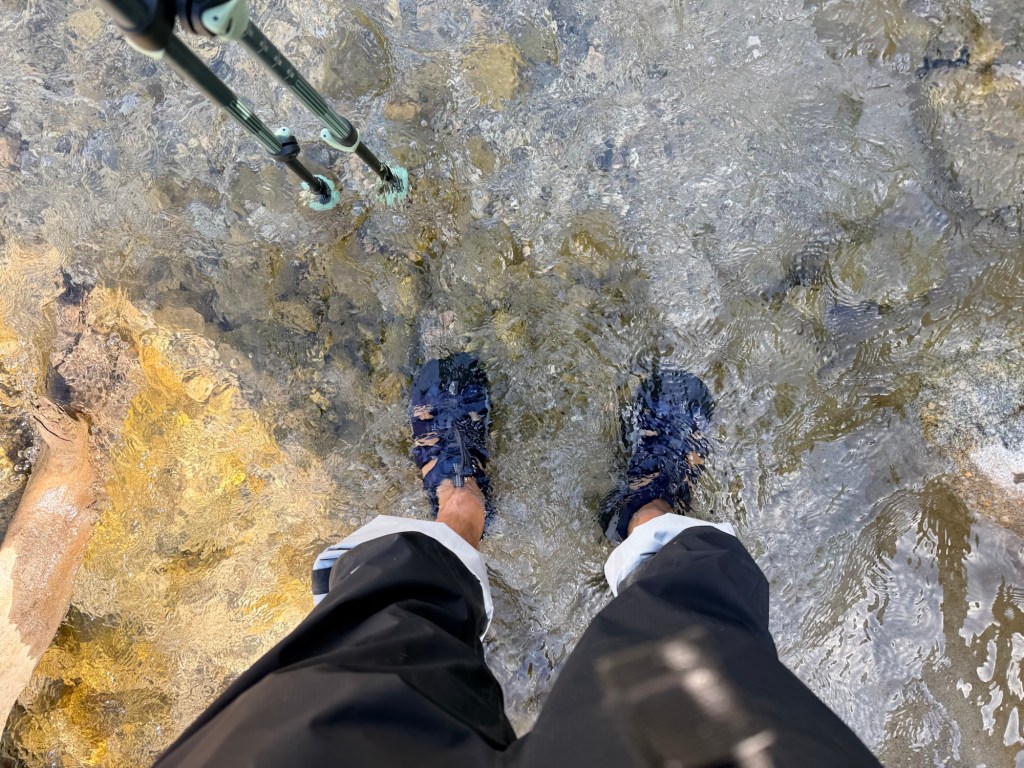
For this stretch, I decided to leave the bear canister and stove behind and instead bring my hiking sandals. Based on what I had read, the upcoming miles through Mission Creek would involve a lot of elevation gain and potentially multiple water crossings, so reducing weight and having flexibility with footwear felt like the better move.
Driving out to Whitewater, the wind was intense.
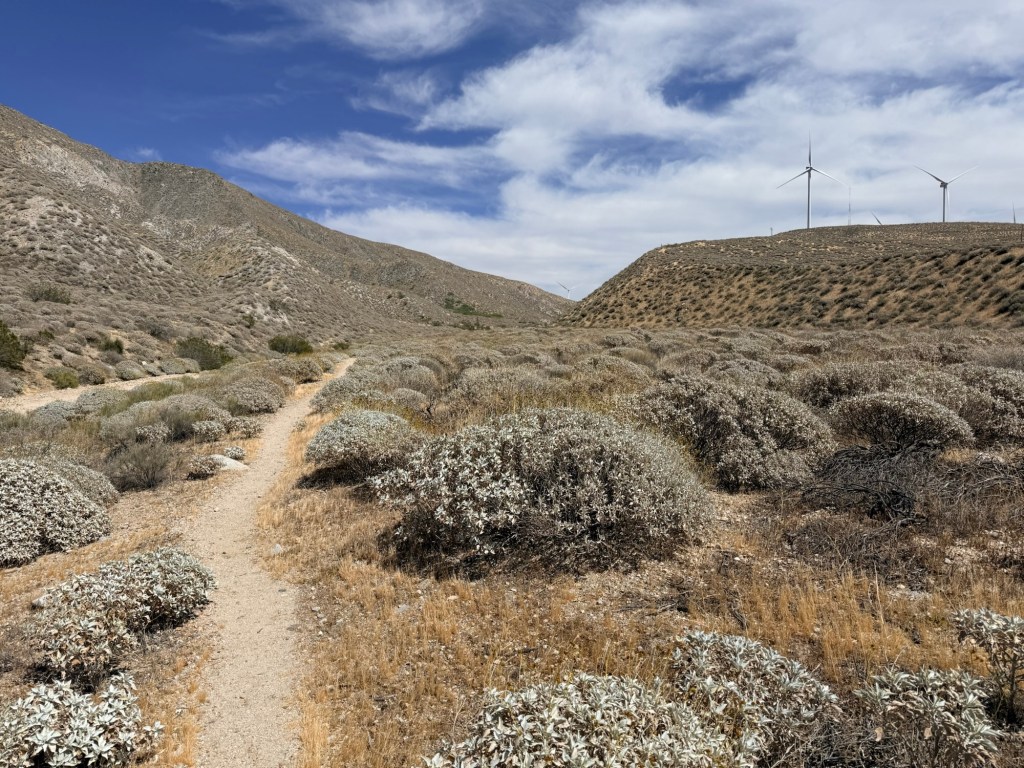
It had me a little concerned before even starting. But once I got on trail, the conditions improved. The first few miles were still windy, but by about three miles in, things calmed down significantly.
From there, the day settled into a long, steady climb.
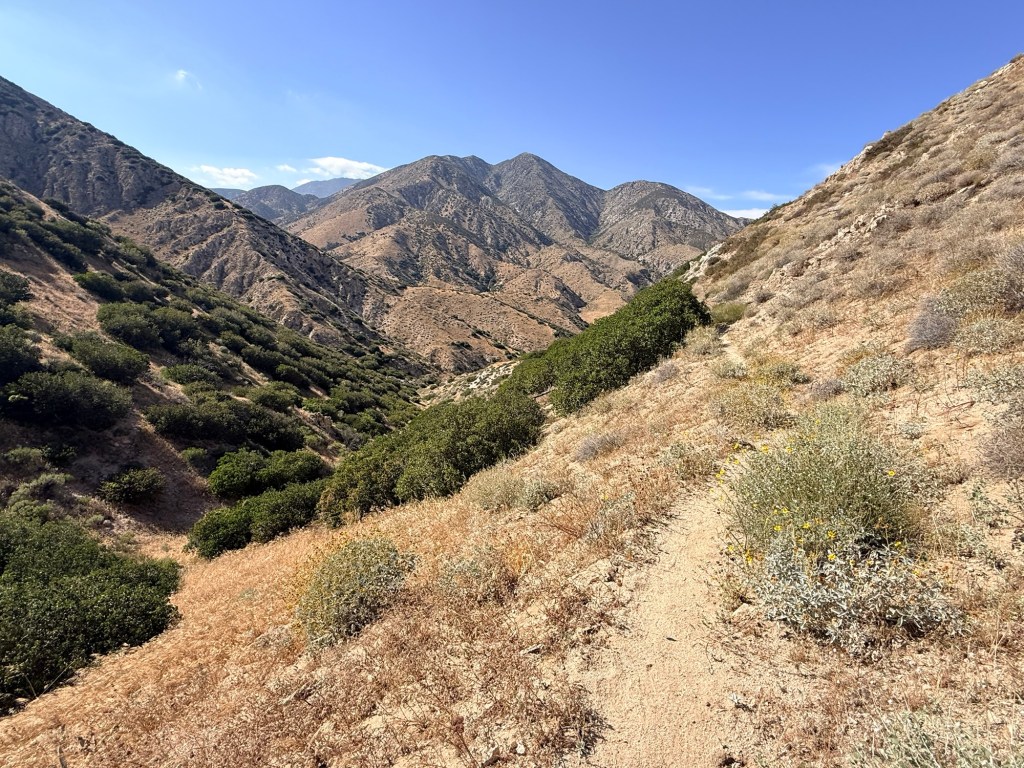
This section gained roughly 1,000 feet over about 10 miles, gradually pulling away from the lower desert and into a more rugged canyon environment. The terrain shifted as I climbed, moving from exposed, dry hillsides into a landscape shaped by water, rock, and erosion.
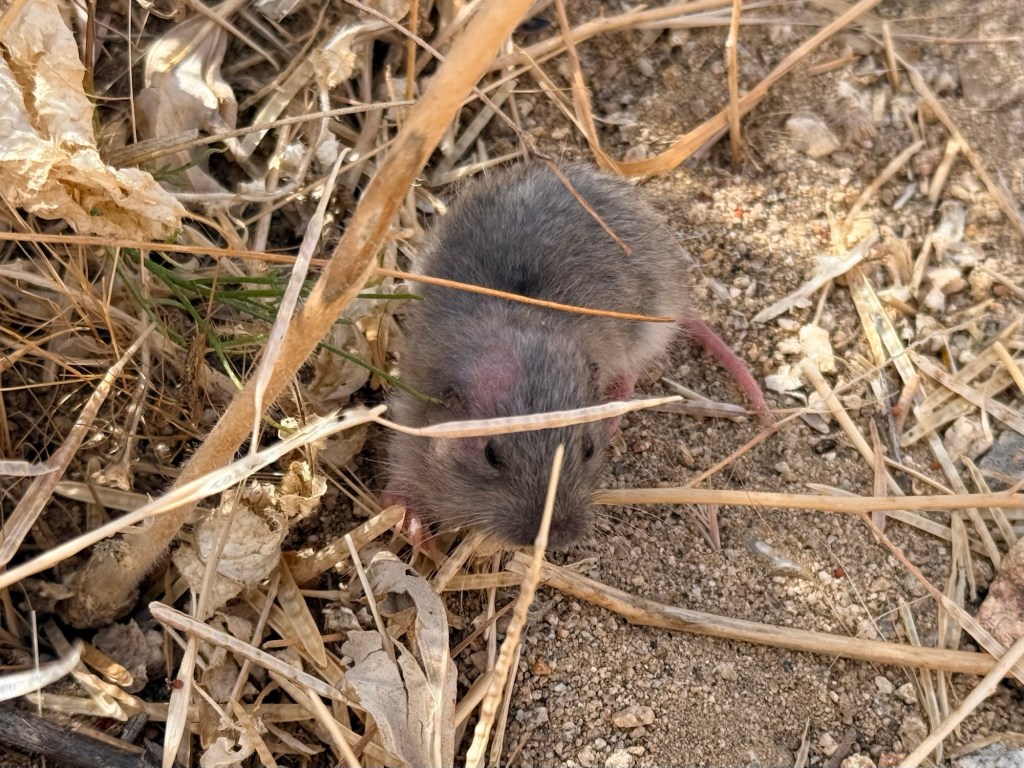
Along the way, I spotted a bit of wildlife.
One mouse, and two snakes.
One of them was a very dark rattlesnake, almost completely hidden in the grass. I did not see it until I was already close, which was a reminder of how easily they can blend into the environment. The other snake was less memorable, but still enough to keep me paying attention to every step.
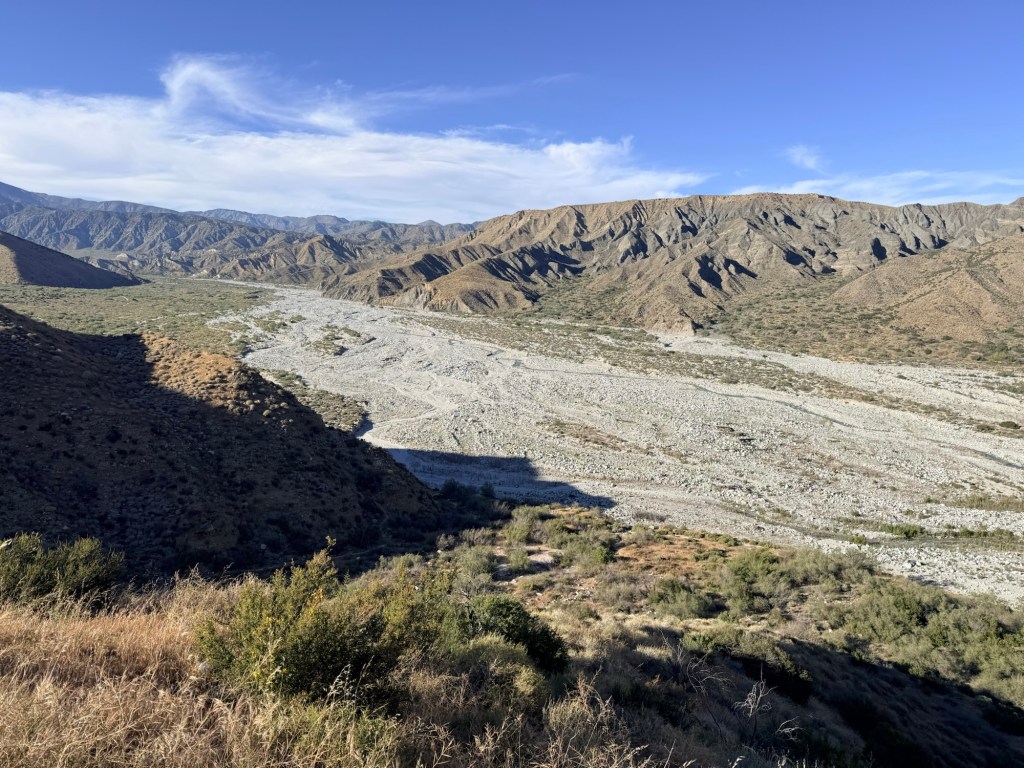
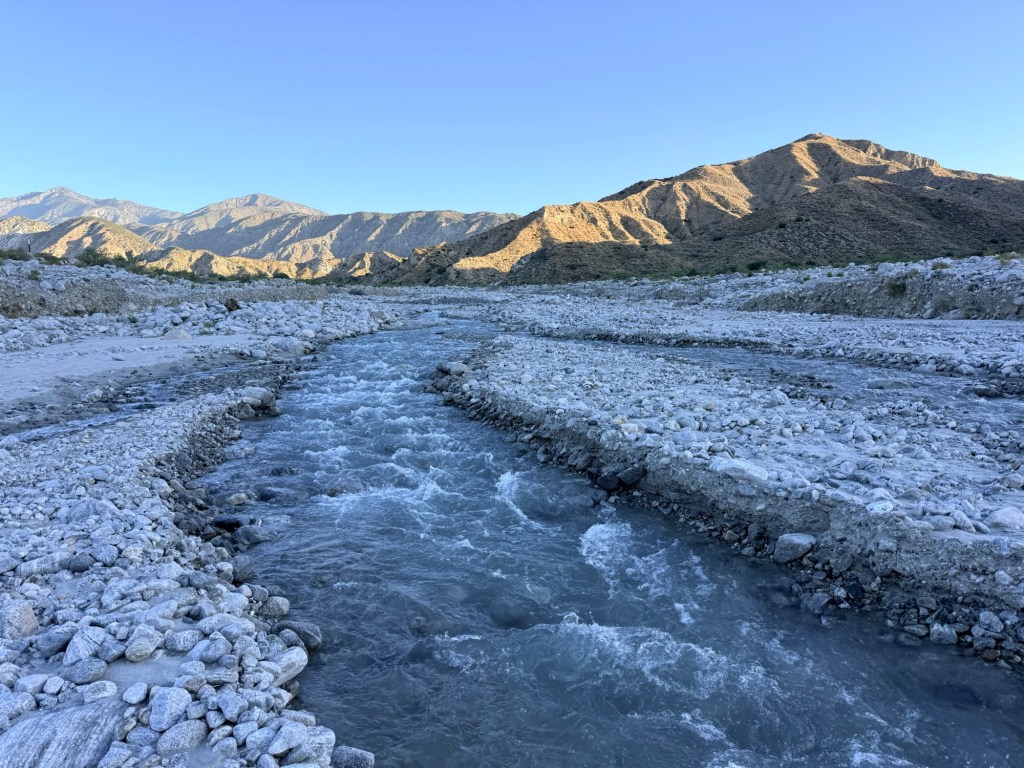
As I continued, I started to see Mission Creek from above.
The trail winds along the canyon walls before eventually dropping down into it, and from that vantage point, you can see the stream cutting through the landscape, lined with greenery that stands out against the otherwise dry surroundings.
It is a different kind of desert.
More alive.
By the time I descended into the canyon, it was around 5:30 PM.
I reached the first set of campsites marked on FarOut. Part of me wanted to keep going and push a few more miles, but the next viable campsite was about four miles ahead, and I did not want to risk setting up camp in the dark again.
So I stopped.
I found a spot just a few yards off the trail, in a relatively open area surrounded by low shrubs, which I hoped would help block the wind. The ground was very sandy, which made setting up the tent a bit tricky. The stakes did not hold well and would loosen easily, so I had to be careful with tension and avoid putting too much strain on the tent walls.
Once I got inside, things settled down.
Not long after, I heard someone hiking past.
I called out and asked if he was planning to stay nearby. He said he could not find a good spot and was going to keep going.
Maybe I will see him again tomorrow.
For now, it was just me, back to camping alone, this time in the quiet of Mission Creek Canyon.
Friday, April 3, 2026 — Mile 219.5 to 239.9
This was my most difficult day yet.
I started the morning early and passed by a tent I assumed belonged to the hiker I had spoken to the night before. I said a quick good morning as I walked by, but he was just getting up. It was already clear we were on different schedules, so I kept moving.
A few miles later, I came across a group of about five younger hikers, probably in their 20s. They were either just getting started or taking an early break. Either way, I did not stop.
At this point, I have a pretty clear mileage goal each day, and I am trying to stay disciplined. Hiking with others is great, but it can also slow things down, and today did not feel like a day where I could afford that.
The trail quickly turned into a grind.
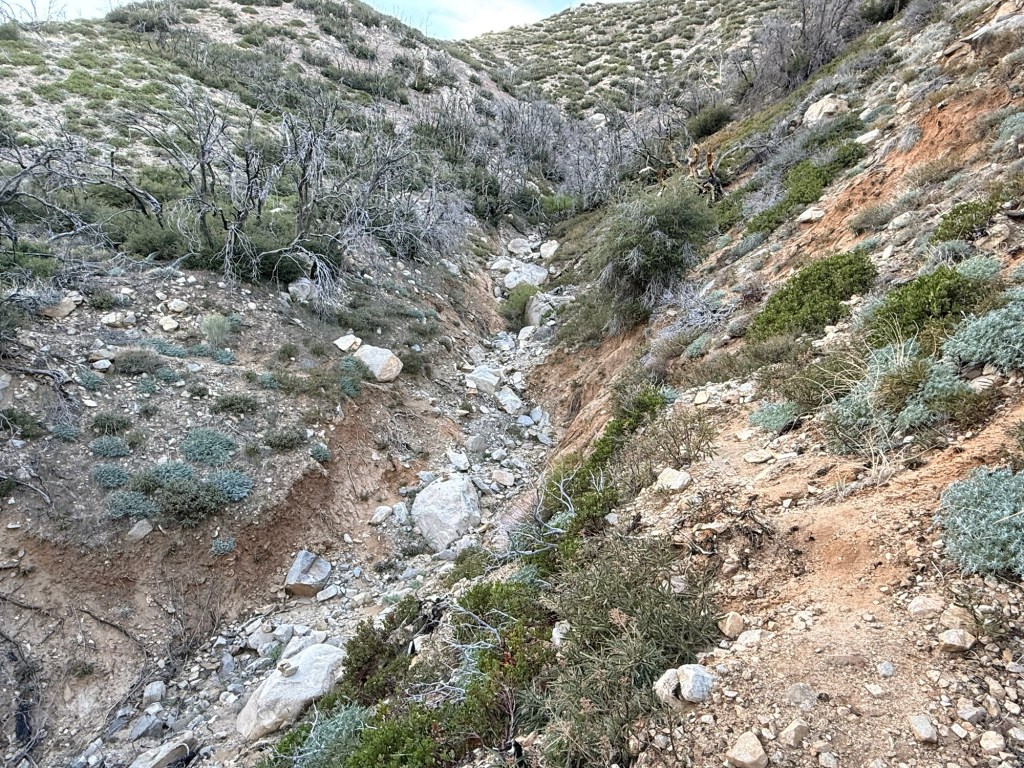
This section through Mission Creek was far more difficult than I expected. The terrain was constantly shifting between rocky creek beds, uneven ground, and steep, eroded banks. In many places, the original trail had been washed out, forcing me to climb up and down loose slopes just to stay on route.
Route-finding became a constant challenge.
I must have lost the trail at least five times, each time having to stop, check my maps, and backtrack until I could pick it up again. It broke any sense of rhythm and made every mile feel slower and more deliberate.
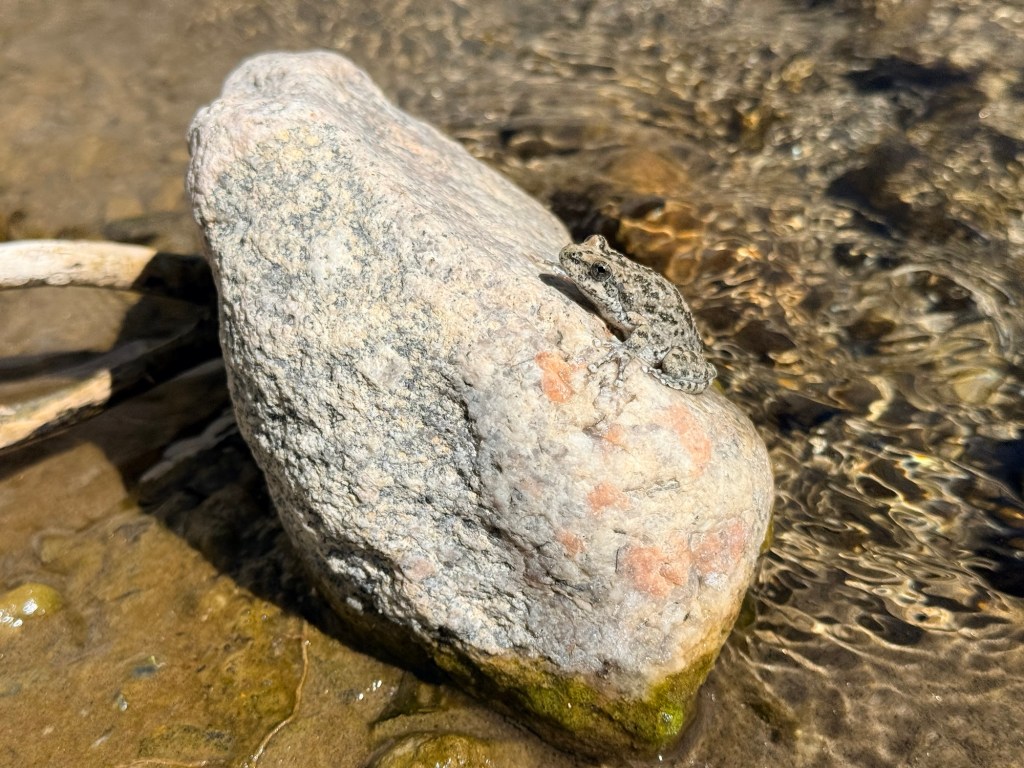
The creek itself was alive.
There were frogs everywhere, scattered along the water, jumping into the stream as I passed. It added a strange sense of energy to an otherwise difficult stretch.
The one major positive of the day was water.
For the first time in a while, I did not have to think about rationing. There was plenty available, and I could filter whenever I needed to. That alone took a layer of stress off.
But everything else made up for it.
By late afternoon, I was focused on reaching a campsite listed on FarOut, supposedly large enough for about five tents.
When I got there, it did not exist.
Or at least, not in any usable form.
That is when the anxiety started to creep in.
I had timed my day to arrive there around sunset, and now I was faced with the reality that I had to keep going and find something else, with daylight disappearing fast.
On top of that, filtering water at the last creek crossing had taken a toll.
My hands got extremely cold, and when I tried to warm them back up with gloves, it took longer than expected. When the circulation finally returned, it felt like they were on fire, a sharp, uncomfortable sensation that lingered longer than I would have liked.
With no campsite in sight, I kept hiking.
Eventually, I had no choice but to continue into the dark, using my headlamp to navigate. For about an hour, I moved slowly, scanning for any spot that might work.
Finally, I found something at the Junction to Mission Camp.
Not great, but good enough.
I set up my tent, quickly ate a protein bar, and crawled inside.
I immediately missed my stove.
A hot meal would have made a huge difference.
The temperature dropped quickly, and despite wearing my wool base layer, down jacket, and using my quilt, I could not seem to get warm.
Lying there, I had a feeling it was going to be another long night.
Cold, tired, and hoping sleep would come anyway.


Leave a Reply