- Monday–Thursday, March 16–19, 2026 — 0 Miles
- Friday, March 20, 2026 — Mile 109.5 to 126.9
- Saturday, March 21, 2026 — Mile 126.9 to 145
- Sunday, March 22, 2026 — Mile 145 to 151.8
- Monday, March 23 – Wednesday, March 25, 2026 — Zero Days (0 Miles)
- Thursday, March 26, 2026 — Mile 151.8 to 162.6
- Friday, March 27, 2026 — Mile 162.6 to 176.5
- Saturday, March 28, 2026 — Mile 176.5 to 193.0
Monday–Thursday, March 16–19, 2026 — 0 Miles
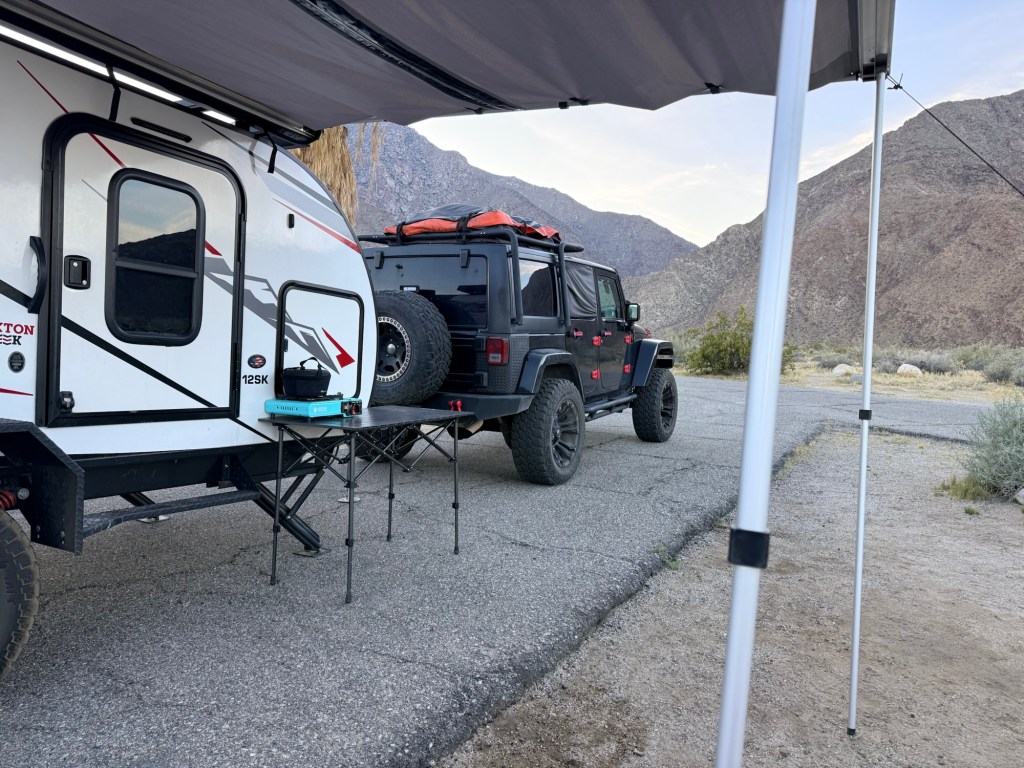
Monday through Thursday were zero-mile days focused on work, recovery, and resetting before the next stretch of trail.
On Monday, I relocated my RV again, this time to Anza-Borrego State Park Campground. The move put me closer to where I would resume hiking, but it also dropped me into much harsher desert conditions.
Southern California was in the middle of a record-breaking heatwave, with daytime temperatures climbing well above 100°F.
From what I was hearing, many PCT hikers were taking zero days to avoid hiking in those conditions. That made me feel better about my own timing. Even though I was working instead of hiking, I wasn’t falling behind in any meaningful way. If anything, the schedule lined up well with the conditions.
The heat was constant.
Even short walks around the campground felt draining. The air was dry, the sun was intense, and there was very little natural cover. It reinforced how critical timing is in this section of the trail. Hiking midday in these conditions would be significantly more difficult and potentially dangerous.
At the same time, I used the downtime to fix one of the biggest logistical problems I had been dealing with: power.
On Monday, I placed an Amazon order for a Jackery 200W solar panel, a lithium battery for my RV, and an Anker 26K 300W power bank for my hike. My existing setup wasn’t keeping up, especially with one broken solar panel and limited charging capacity for both work and trail use.
Everything arrived later that week and made a huge difference. The new solar panel significantly improved charging capability during the day, the lithium battery provided more reliable and efficient power storage for the RV, and the Anker power bank gave me a much stronger backup option for the trail. It felt like a full system upgrade.
On Tuesday night, I ran into something I had never seen before.
A camel spider.
At first, I couldn’t tell what it was. It moved quickly, and in the low light it looked like some kind of cross between a spider and a scorpion. After looking it up, I learned what it was, which somehow made it worse.
They aren’t venomous, but they are fast. Faster than I would prefer. Knowing that added a new layer of awareness to being outside at night.
It introduced a new, very specific concern I hadn’t thought about before.
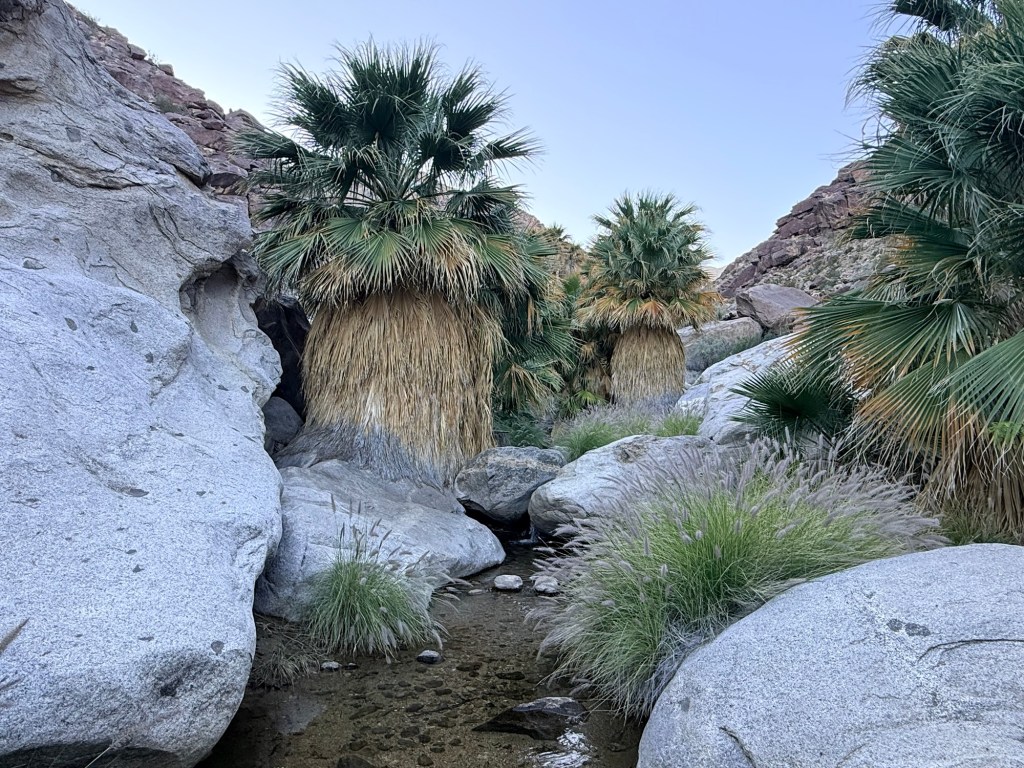
On Wednesday, I took advantage of being in the area and hiked the Borrego Palm Canyon Trail.
The trail starts in classic desert terrain, dry washes, loose rock, and sparse vegetation. As you move deeper into the canyon, the environment gradually changes. The canyon walls rise, providing shade, and the vegetation becomes noticeably greener.
Then the landscape shifts suddenly.
At the end of the trail, there’s a true desert oasis. A cluster of California fan palms grows in the canyon, supported by a natural water source. After miles of dry desert, seeing tall green palms and flowing water feels almost out of place.
It’s one of those moments that highlights how dynamic these environments can be.
Physically, I was feeling much better by this point.
Most of the soreness from earlier in the week had faded, especially in my feet. There was still some minor discomfort, but nothing that felt limiting.
My toenails told a different story.
They had turned dark red and black from the bruising underneath. Even though they hurt less, they looked worse. It was a reminder that damage can linger even after the pain starts to fade.
Overall, these zero days were exactly what I needed.
Time to recover, adapt to the heat, upgrade my setup, and prepare for the next stretch of the Pacific Crest Trail.
Friday, March 20, 2026 — Mile 109.5 to 126.9
I adjusted my plan slightly for the day.
Since I only needed to cover about 45 miles this weekend instead of 60, I decided to work a half day on Friday, logging about five hours before heading back onto the trail. I set up at the Warner Springs Community Center, which made it easy to transition straight from work mode to hiking mode.
Before heading out, I grabbed a vegetarian chorizo breakfast burrito from someone selling food outside the community center. It was large, hot, and exactly what I needed before getting back on trail.
The heat hit immediately.
Southern California was still in the middle of a record-breaking heatwave, and even though I was at a higher elevation than my campground, temperatures were still climbing into the high 90s. The sun felt intense, and there was very little shade in many sections. It was one of those days where you have to be constantly aware of hydration and pacing.
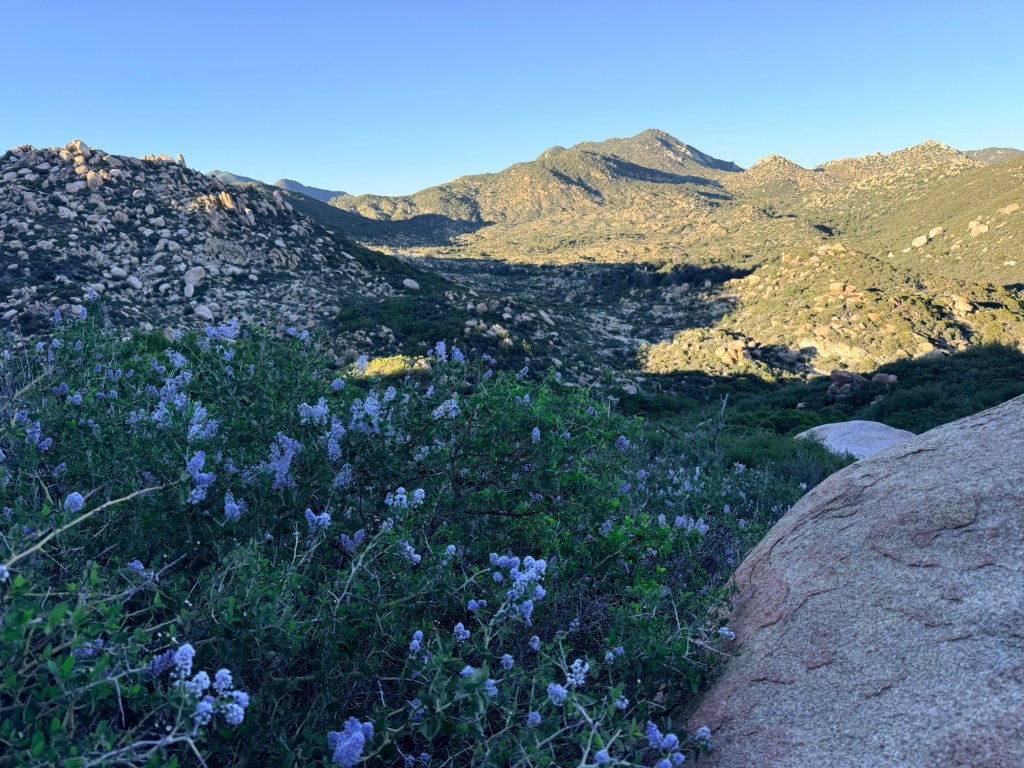
Once I started hiking, the terrain continued the gradual transition I had been noticing over the past few days. The dry desert still lingered, but there were more signs of life. The trail wound through rolling hills, patches of green vegetation, and occasional shaded areas, a contrast to the more exposed miles earlier in the hike.
About seven miles in, I came across a stream and decided it was a good opportunity to refill my water.
After filtering about a liter using my Platypus QuickDraw, I looked upstream and noticed a man sitting about 50 feet away, reading a book with his legs and feet in the water. We waved and said hello.
It then hit me that I was about to drink water that had just flowed past his feet.
Not ideal.
But I reminded myself that my filter is designed to handle far worse than that, so I went ahead and filled up anyway.
My original goal for the day was to hike about 10 miles, but I felt strong and kept going. One of the biggest advantages of hiking solo is the flexibility. You can stop when you want, push when you feel good, and adjust your pace without coordinating with a group.
By the time I checked my mileage, I had already covered 18 miles.
I probably could have gone further, but the sun was starting to set, and I needed to find a place to camp.
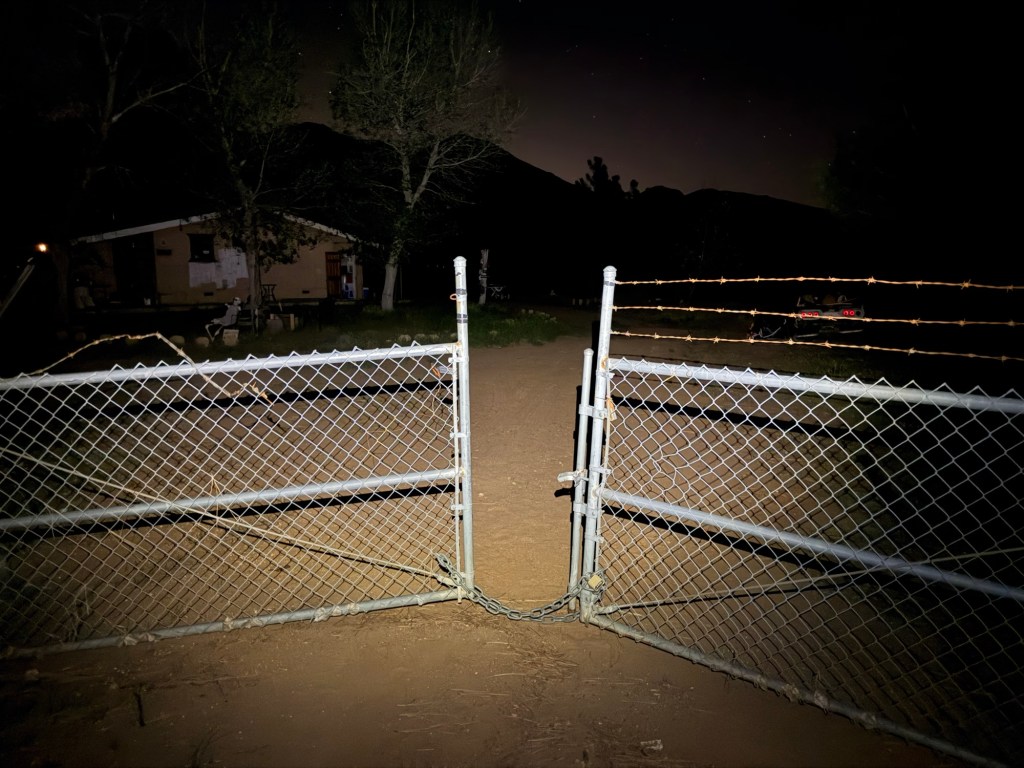
Looking at the FarOut app, I saw a water cistern near a place called “Mike’s Place.” I figured that might be a good place to stop for the night, so I followed a short side trail off the PCT to check it out.
By the time I arrived, it was already dark.
I called out a few times to see if anyone was around but did not hear a response. Not wanting to wander around aimlessly in the dark, I walked through the gate toward the house and called out again.
This time, I heard a faint voice respond from the back.
I made my way around and found three people already settling in for the night, cowboy camping on the porch. I asked if it would be okay if I joined them.
They agreed, though I got the sense that they might have preferred to keep things to their group. It was late, and I probably was not the most convenient addition.
I felt a bit awkward setting up my gear with my headlamp, trying to be as quiet as possible but still making noise for about 10 minutes while laying out my sleeping pad and quilt.
This was my first time cowboy camping, sleeping outside without a tent.
I was a little on edge at first. The idea of insects or mice wandering too close while I slept was not exactly comforting.
Unfortunately, sleep did not come easily.
The person next to me was snoring loudly, and even with earplugs, it was hard to block it out. I spent most of the night tossing and turning, occasionally looking up at the sky.
On the bright side, the stars were incredible, and every so often I could see a bat flying overhead, darting through the night.
Still, between the noise, the heat earlier in the day, and the unfamiliar setup, I got very little real sleep.
It was not the most restful night, but it was another new experience on the trail.
Saturday, March 21, 2026 — Mile 126.9 to 145
The night never really turned into sleep.
By the time the three hikers I had cowboy camped with started stirring around 5:00 AM, I was relieved. Lying there awake for hours, listening to snoring and staring into the dark, I was ready to move. We chatted briefly as we packed up. They were all from San Jose, and before I left, they gave me one useful tip about the water cistern I had passed the night before, make sure to filter it.
I left first.
Partly to get moving, partly because I wanted to figure out the water situation before the others caught up. I made my way back to the cistern in the dark, headlamp lighting up a small circle in front of me. It was quiet, almost too quiet. I turned the valve, let the water flow, and filtered what I needed. The process was surprisingly smooth, even half-asleep and working in the dark.
Then I stepped back onto the trail.
Hiking in the dark has a different feel to it. Your entire world shrinks to whatever your headlamp touches. Everything beyond that is just shadow. I do not wear headphones during these early hours. I want to hear everything, especially anything that might resemble a rattle.
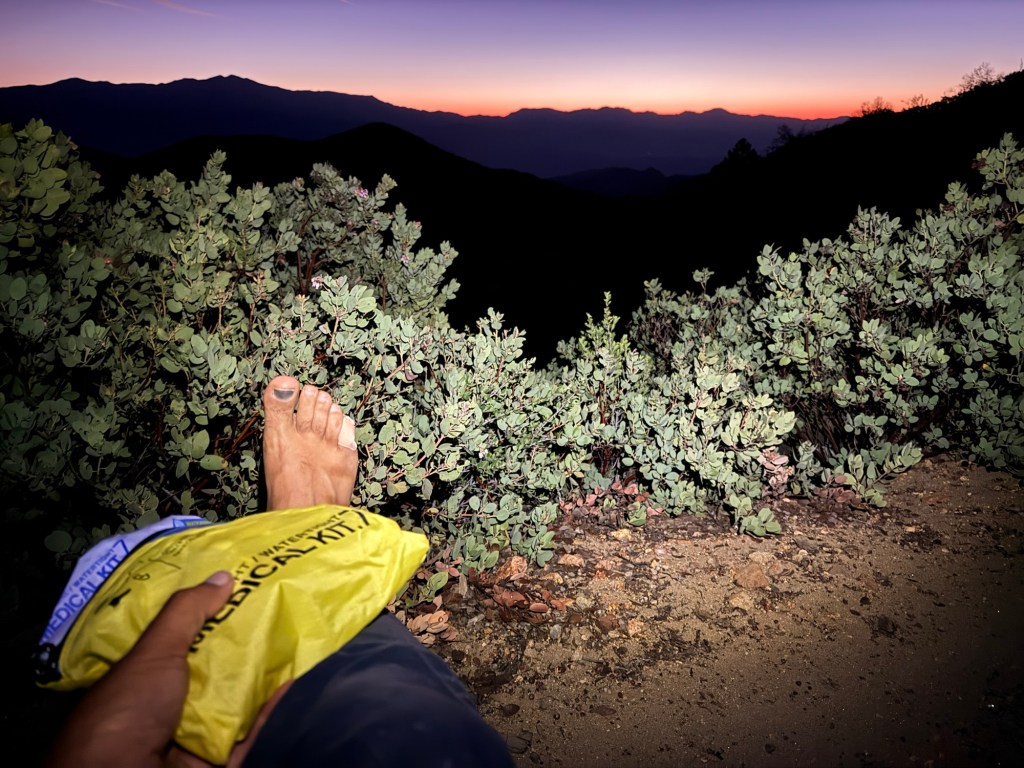
As the miles started to pass, I noticed a hot spot forming between my pinky toe and the one next to it. I stopped, sat down in the dirt, and wrapped it with a bandage before it could turn into something worse.
Right around then, the sun started to rise.
I stayed seated for a few minutes longer than necessary, just watching it. Out here, sunrise feels different. Slower. Quieter. Like the day is easing itself into existence rather than flipping on all at once.
The rest of the morning and early afternoon were mostly solo miles.
I rotated between silence and podcasts, eventually settling into a Joe Rogan episode with the actor who plays Kayce Dutton from Yellowstone. It was one of those long-form conversations that works perfectly on trail, three hours gone without noticing, about eight miles covered.
They talked about everything, MMA, addiction, hunting, life outside of Hollywood. At one point, the conversation shifted to how brutal it would be to die from a grizzly bear attack.
That thought stuck with me.
Not because it mattered here, but because it will matter later. Northern California is coming. The trail has a way of planting seeds like that.
As the day went on, I kept leapfrogging other hikers.
One guy, Sean, I must have passed at least four times. At one point, he was stretched out under the only good patch of shade I had seen in miles, leaning against a perfect rock.
I wanted that spot badly.
But I kept walking.
I did not ask to share it. Not because he would have said no, but because sometimes it feels easier to just keep moving than to insert yourself into someone else’s space.
By mid-afternoon, the day started to turn.
I began thinking about water.
There was supposed to be a concrete cistern ahead, but the reviews on FarOut mentioned it was filled with bugs. I decided to skip it and rely on what I had left, about 1.5 liters, with roughly 12 miles to go to the road near Paradise Valley Cafe.
That decision did not age well.
The heat climbed into the high 90s, and the sun felt relentless. A few miles later, I ran out of water completely.
At the same time, the pain in my right foot, right where my toes meet the rest of my foot, started to come back. It was now the only real pain point I had left, but it was getting sharper with each step.
Thirst and foot pain is not a great combination.
Fortunately, I remembered seeing something on FarOut, a place called Little Bear’s Hostel, about a mile off trail. Reviews said there was water there.
So I made the turn.
The walk through the quiet residential street felt strange after hours on trail. When I got there, I called out. Nothing. No response.
But there was a faucet with a sign saying the water was potable.
That was enough.
I started filling my bottles, and right as I did, I saw Sean walking up behind me. It was a relief not to be the only one there.
A few minutes later, the owner spoke to us through an intercom, telling us to make ourselves at home and that he would be back in about an hour.
We did exactly that.
We walked inside and opened the refrigerator.
It was fully stocked, sodas, Gatorades, ice cream, beer, hotdogs, snacks. For someone who had just run out of water in the heat, it felt almost surreal.
Everything had prices listed, and we started grabbing what we needed.
Or more accurately, what we wanted.
By the end of it, I had gone through a soda, two Gatorades, two vegan hotdogs, four beers, two bags of chips, an ice cream sandwich, and an ice cream cone.
It was excessive. It was also exactly what my body and mind were craving.
I had hoped to push for 26 miles that day to resemble a marathon.
But sitting there, hydrated, fed, and finally comfortable, it was clear that sticking to the original plan made more sense. There was no reason to force extra miles.
So I decided to stay the night.
Later that evening, a few more hikers showed up, including the same guy I had seen sitting in the stream the day before. We all ended up hanging out with the owner, talking until around 8:00 PM.
Strangely, almost every topic we talked about had come up earlier in that podcast. It felt like the same conversations were looping from one context to another.
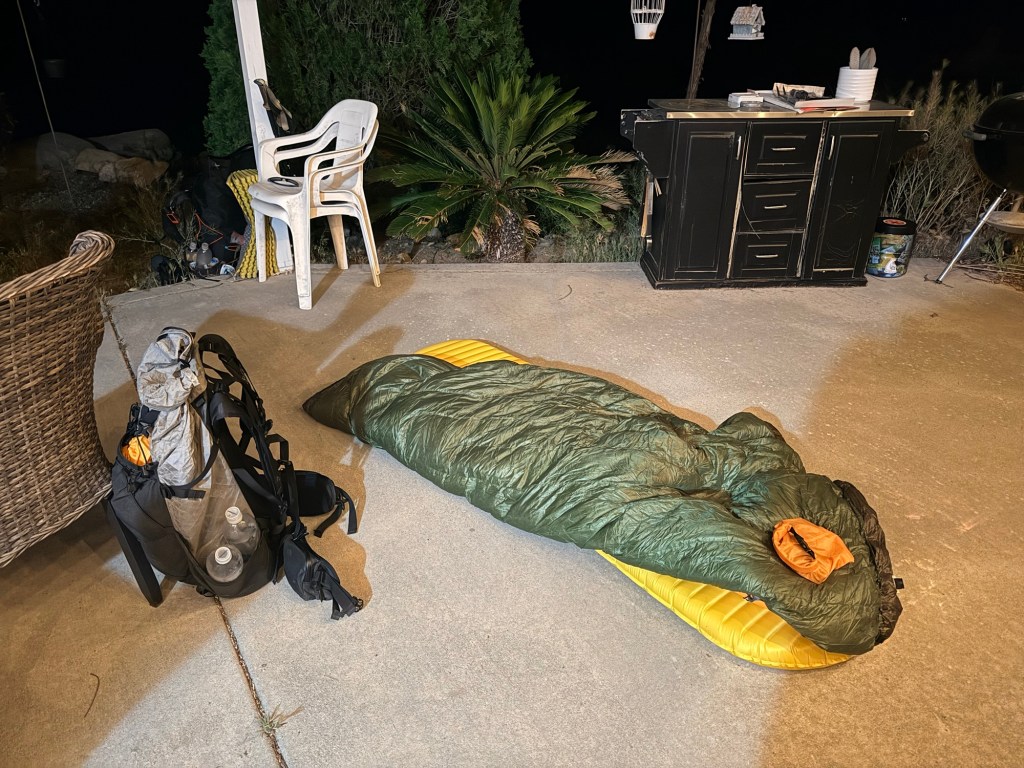
That night, we all cowboy camped on the porch.
By now, I understood the appeal. No tent setup, no breakdown in the morning, just lay your pad down and sleep.
And for the first time since starting this hike, I actually did.
I got a full eight hours of sleep.
No wind, no snoring, no tossing and turning.
Just sleep.
Easily the best night I have had on the trail so far.
Sunday, March 22, 2026 — Mile 145 to 151.8
I woke up right at sunrise, feeling more rested than I had in days.
After a full night of sleep, real food, and hydration from the hostel, I felt recharged and ready to finish this section. I said goodbye to everyone, exchanged Instagram handles, and headed out early. I was eager to knock out the final miles and get to the road crossing near Paradise Valley Cafe, where Paula would pick me up.
Getting back to the trail was not completely straightforward.
It took me a few minutes to retrace my steps from the residential street back to the PCT. Without AllTrails navigation, I probably would have been stuck waiting for the others to wake up and lead the way. It is one of those tools that quietly becomes essential. Out here, it is very easy to lose the trail if you are not paying attention.
Once I was back on track, the day started with a steady uphill climb.
Most of the 7-mile stretch was gradual ascent, but compared to previous days, it felt manageable. My body finally felt like it was cooperating. The combination of food, water, and real sleep made a noticeable difference. Even the nagging foot pain had eased up.
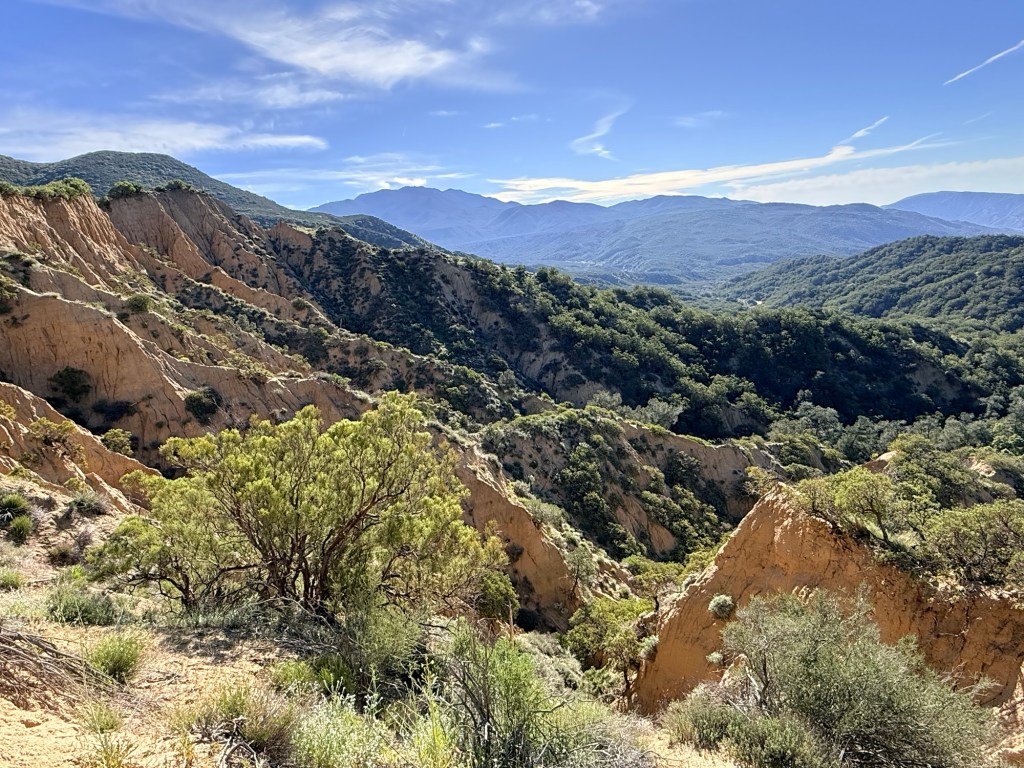
The landscape continued to reflect that transition zone between desert and higher elevation terrain. The hills were still dry and exposed in places, but there were more patches of low shrubs, scattered trees, and textured rock formations. The air felt slightly cooler than the previous day, though the sun was still strong.
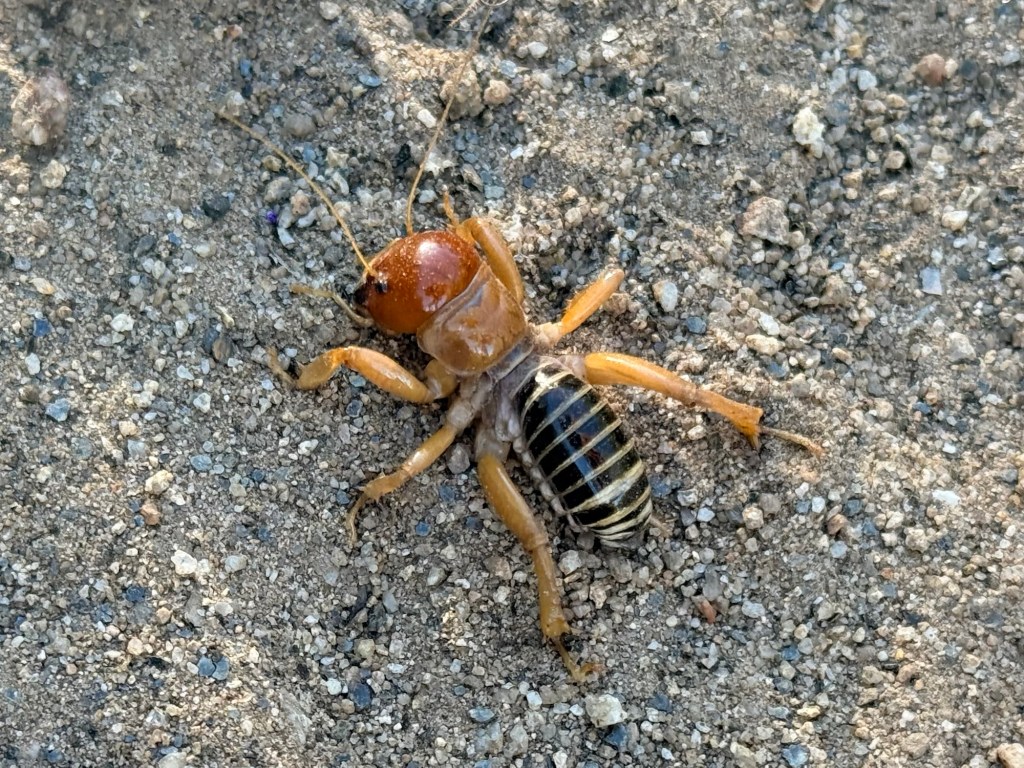
At one point along the trail, I came across a strange-looking insect.
It had a thick, almost armored body with long legs and a somewhat unsettling appearance. I later learned it was a Jerusalem cricket, one of those creatures that looks more intimidating than it actually is, but still not something you want crawling across your hand.
By mid-morning, I reached the road crossing near Paradise Valley Cafe.
I finished around 10:00 AM, which felt like a win. Finishing early gave me the entire day to reset, take care of logistics, and prepare for the next stretch.
Paula arrived with my Jeep, and from there, the day quickly shifted from trail mode to life admin.
First, I relocated campgrounds, moving from Anza-Borrego State Park Campground to Thousand Trails Palm Springs.
Then it was time for resupply.
I stopped at Sam’s Club to stock up on hiking food and groceries for the upcoming work week. After that, I made a stop at REI to upgrade and replace some gear based on everything I had learned over the past week.
Here is what I picked up:
- Jetboil 1L Fast Boil System to start cooking on trail
- Black Diamond shock-absorbing trekking poles to replace my ultralight ones that would not hold up well in mud and snow
- Salomon Speedcross 6 (size 8.5) to replace the size 8s that were causing toe issues
- Super Feet Run Cushion High Arch Insoles to hopefully mitigate my foot pain
- REI Rainier Rain Pants (Small Short) to replace the Small Long that did not fit properly
- Toaks spork to replace my spoon
Now that I finally have my backpack dialed in, I feel more confident adding a bit of weight where it actually improves comfort and capability. That includes bringing a stove and eventually a bear canister for later sections of the trail.
After getting everything set up back at the RV, I kept the rest of the evening simple.
I relaxed, caught up on video games and TV shows, and spent some time writing and organizing these blog posts.
Monday, March 23 – Wednesday, March 25, 2026 — Zero Days (0 Miles)
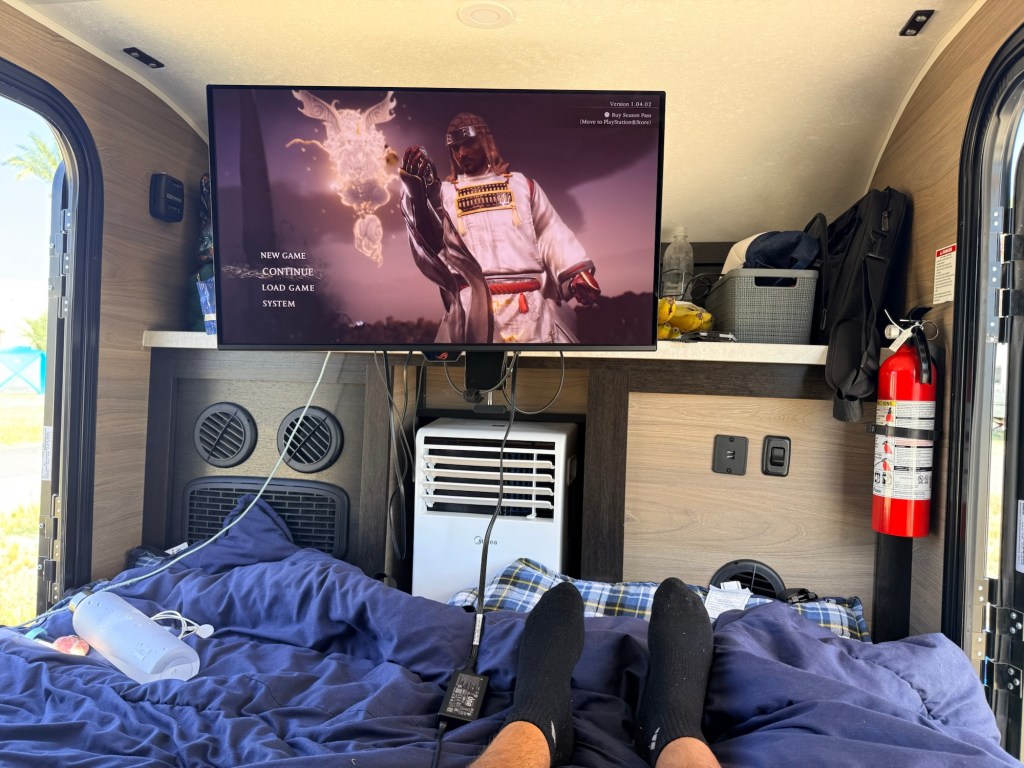
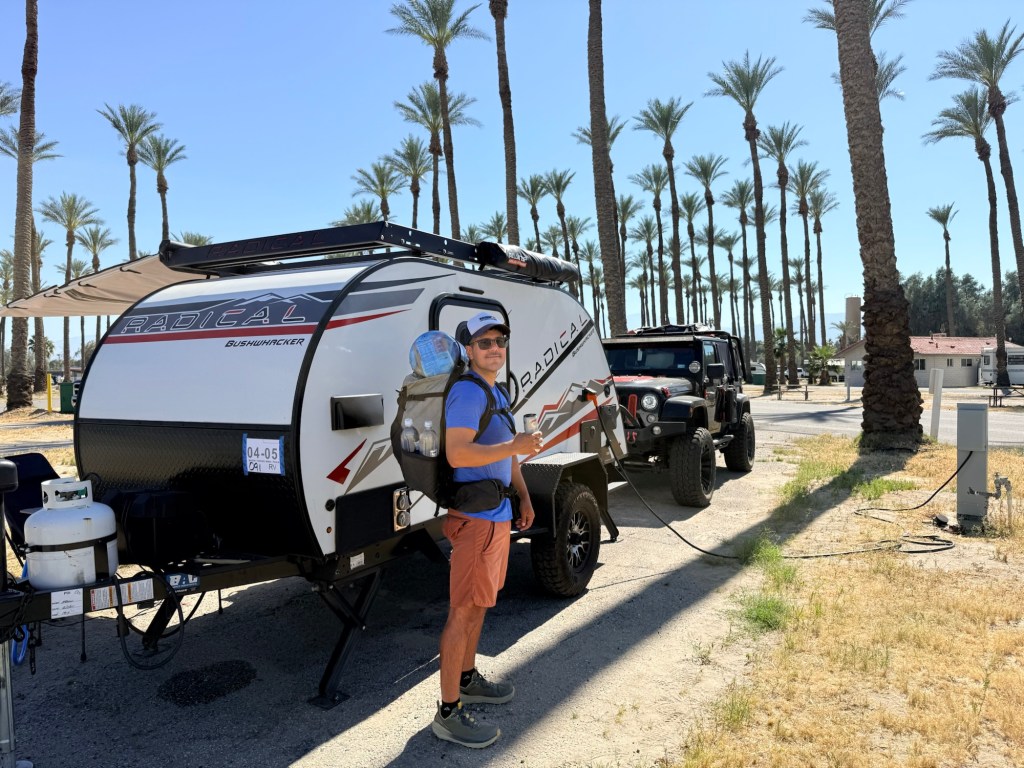
Monday through Wednesday were back to work days, this time based out of Thousand Trails Palm Springs.
After the constant movement of the trail, these days settled into a steady rhythm. Work during the day, then a slow unwind in the evenings. I spent time playing video games, watching TV shows, and just letting my body recover from the previous stretch.
A couple nights, I made my way to the hot tub.
Sitting there after a long day, looking up at the towering palm trees silhouetted against the sunset, and later the stars, felt like a completely different world from the trail, even though I was still right in the middle of it. It was one of those rare moments where everything slows down and you can just sit still for a while.
At the same time, I started thinking more seriously about the logistics of finishing the trail on schedule.
Up to this point, I had been relying mostly on Thursday through Sunday hiking, with Monday through Wednesday reserved for work. But looking ahead, it is becoming clear that may not be enough.
To stay on track, I will likely need to start incorporating weekday hiking, especially Monday through Wednesday evenings or partial days.
The big question is whether that will actually be feasible.
Everything depends on road access. In Southern California, road crossings are frequent enough to make this hybrid approach work. But as I move further north, especially into more remote sections, those access points may become less reliable.
For now, it is a planning problem.
How to balance work, recovery, logistics, and mileage without burning out.
These zero days were not just about rest. They were about stepping back, looking ahead, and starting to adjust the strategy for the long stretch still to come.
Thursday, March 26, 2026 — Mile 151.8 to 162.6
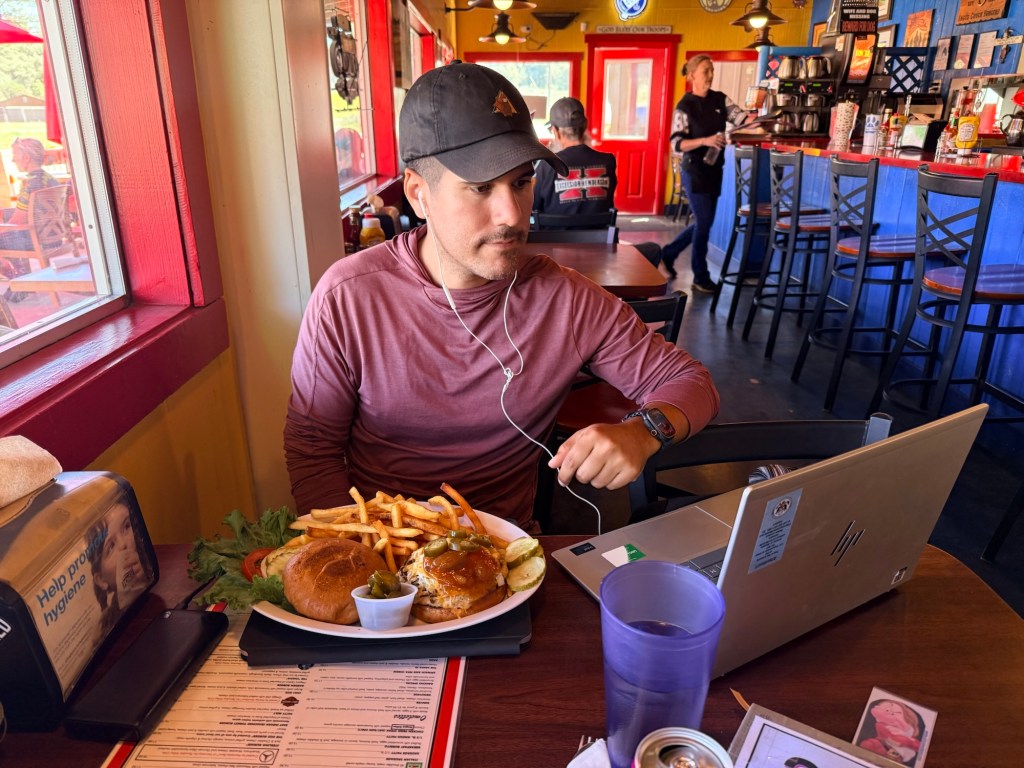
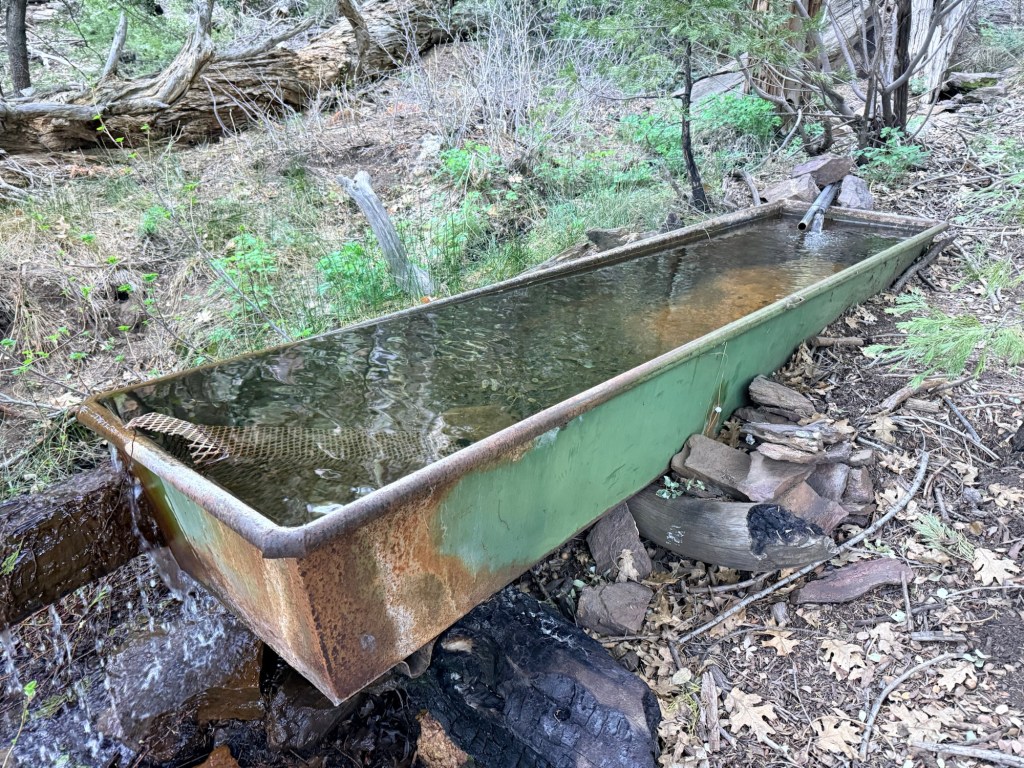
The day started in a familiar way, with work in the morning at the campground, followed by a move to Paradise Valley Cafe to finish out the rest of the day. It is becoming a bit of a routine, shifting between work mode and trail mode within the same day.
While there, I ordered a vegetarian burger, which ended up being one of those unexpectedly great meals that sticks with you longer than it should. After finishing work, I did one last gear check, packed everything up, and headed back out onto the trail.
This time, I was carrying about five extra pounds compared to previous hikes.
Between the bear canister, stove, and larger battery pack, my base weight had crept up. At first, I definitely felt it. My legs noticed the difference right away, and the climbs felt a bit heavier than usual.
But after a few miles, something interesting happened.
My body adjusted.
The weight did not feel dramatically worse than before. It was noticeable, but manageable. What I did notice more was the mental burden of carrying the bear canister. I kept imagining it coming loose while I was hiking along a ridgeline and rolling straight down a cliff with all my food inside.
That never happened.
But it did fall off once while I was taking off my pack, which was enough to make me double-check it constantly for the rest of the day.
The plan for the day was simple, hike about 13 miles to Cedar Spring.
From everything I had read on FarOut, it was the most reliable water source in that stretch, and worth the one-mile detour and 400 feet of elevation change to reach it. After the previous weekend, I was being much more deliberate about planning water and campsites ahead of time.
No more guessing. No more hoping things would work out.
As I hiked, I settled into a solo rhythm again, rotating between podcasts and music playlists to pass the time.
At one point, I ran into Jacob again, this time hiking with a girl. This was my third time crossing paths with him, which felt unlikely given how many zero days I had taken for work. The trail has a funny way of reshuffling people and bringing them back together.
He mentioned he was also planning to camp at Cedar Spring, so I figured I would see him again that evening.
On my way down the side trail toward the spring, I passed another hiker heading back up.
He stopped and told me it was a beautiful spot, and gave me a piece of advice I would not have figured out on my own. He said to keep walking past the initial water and find the spot where it comes out of a pipe, since that is the cleanest source.
That tip alone probably saved me from filtering questionable water.
I asked him why he was leaving instead of staying, and he said he had to get to Idyllwild the next day to meet a friend.
It was a good reminder that even out here, people still have timelines, commitments, and places to be.
When I reached Cedar Spring, it lived up to the description.
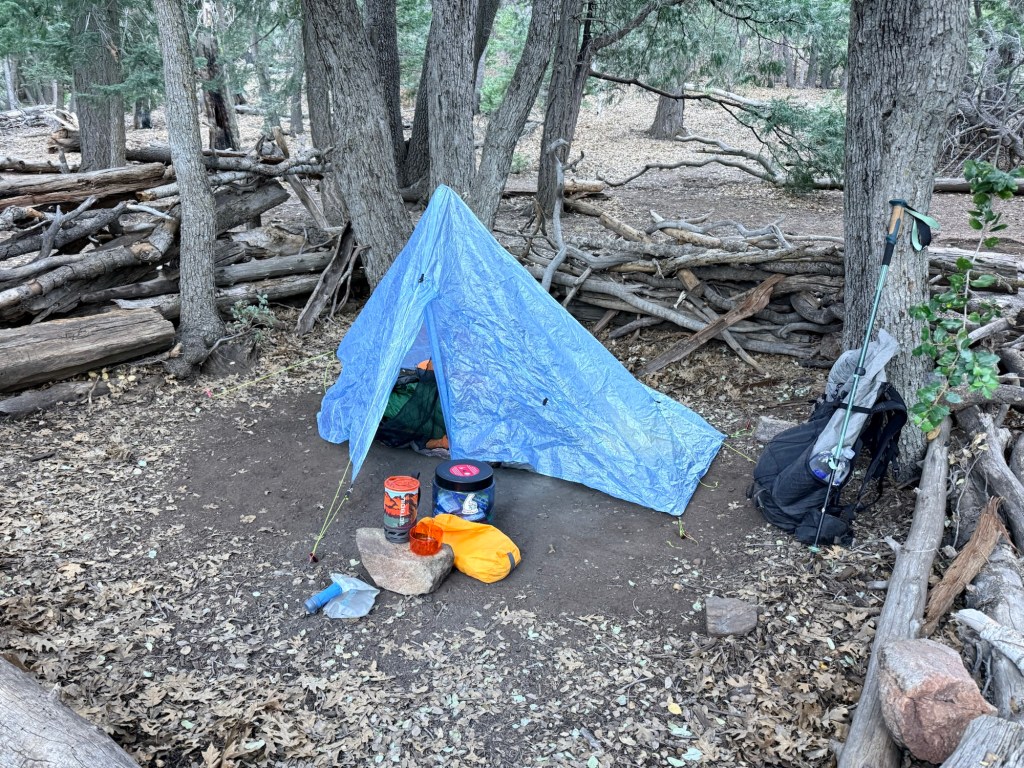
I filtered about three liters of water and found a campsite that looked like it had been used before, surrounded by a rough makeshift fence of fallen branches. It felt like a good place to settle in for the night.
Then came another milestone.
I cooked my first real meal on trail.
Using my new stove, I decided to try the Idahoan potatoes. Setting everything up on the dirt made it harder than expected to keep things clean. At one point, I noticed a thin layer of dirt had gotten into my water, and I ended up using my spork to scoop it out.
Not exactly ideal.
Then, while pouring the boiling water into the bag, I missed slightly and burned one of my fingers.
The second attempt went better.
What I failed to notice beforehand was the serving size.
The bag was meant for four servings.
Since it did not reseal, and I did not want to waste food, I committed to eating the entire thing.
That decision caught up to me quickly.
By the time I finished, I was completely full. The ramen I had planned to make went back into my pack for another day, and I settled for a small oat smoothie instead.
As the sun went down, I crawled into my tent.
The campsite felt a little different than others.
I was completely alone.
Jacob and his hiking partner never showed up, and once it got dark, the area felt quiet in a way that was almost too quiet. I could hear small animals moving around in the brush, which kept my attention longer than I would have liked.
But something has started to change.
Those sounds that once felt unsettling are becoming more familiar. Less threatening.
I still noticed them, but they did not keep me awake.
Eventually, I fell asleep, alone at Cedar Spring, a little more comfortable in the quiet than I would have been just a week ago.
Friday, March 27, 2026 — Mile 162.6 to 176.5
Sleep came in waves.
I woke up around five times throughout the night, but each time I managed to fall back asleep within a few minutes. By 6:00 AM, about 40 minutes before sunrise, I was up for the day.
Mornings are starting to take longer.
Between making coffee, finding a spot for the “restroom,” topping off water, and packing everything up, it took about an hour before I was ready to move. It is a slower process than I expected, but it is becoming part of the rhythm.
The day began with a 400-foot climb just to get back onto the main trail from Cedar Spring.
It felt like a warning.
That climb set the tone for what the rest of the day would look like.
And it was not wrong.
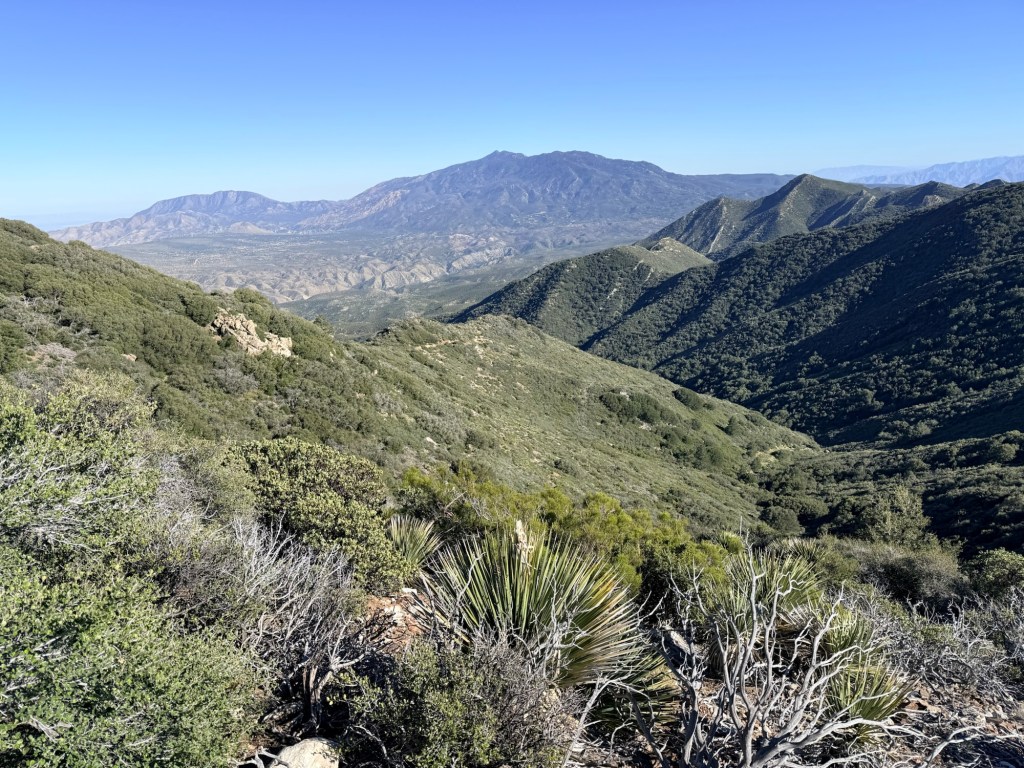
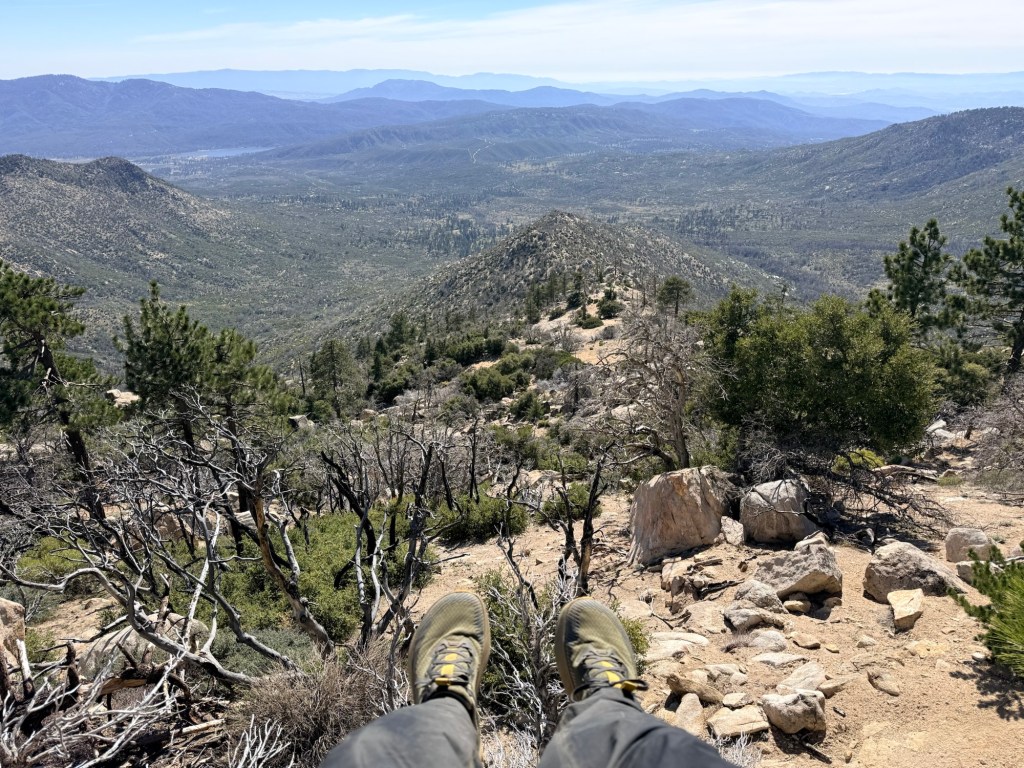
This stretch of trail was physically demanding, with roughly 3,000–4,000 feet of elevation gain spread across the day. The trail wound through increasingly rugged terrain, transitioning from dry, exposed slopes into higher elevation forested sections with pines, oaks, and dense chaparral. The air felt cooler at times, but the climbs were relentless.
There were very few stretches where you could just settle in and cruise.
For the first 10 miles, I actually felt pretty good.
One thing I started to notice was how closely tied my energy, appetite, and hydration are. When I am not overly exhausted or dealing with pain, I naturally eat and drink more. And when I do that, I feel stronger.
It becomes a positive cycle.
Eat more, feel better, hike stronger, which makes it easier to keep eating and drinking.
The last four miles were a different story.
Fatigue started to set in, and I could feel it in both my shoulders and feet. The added weight from the bear canister and gear, combined with the elevation gain, finally caught up to me.
That said, there was a noticeable improvement.
My feet held up longer than they had before, which made me think the new insoles were actually working. Given the terrain and weight, I expected the pain to start earlier.
That felt like progress.
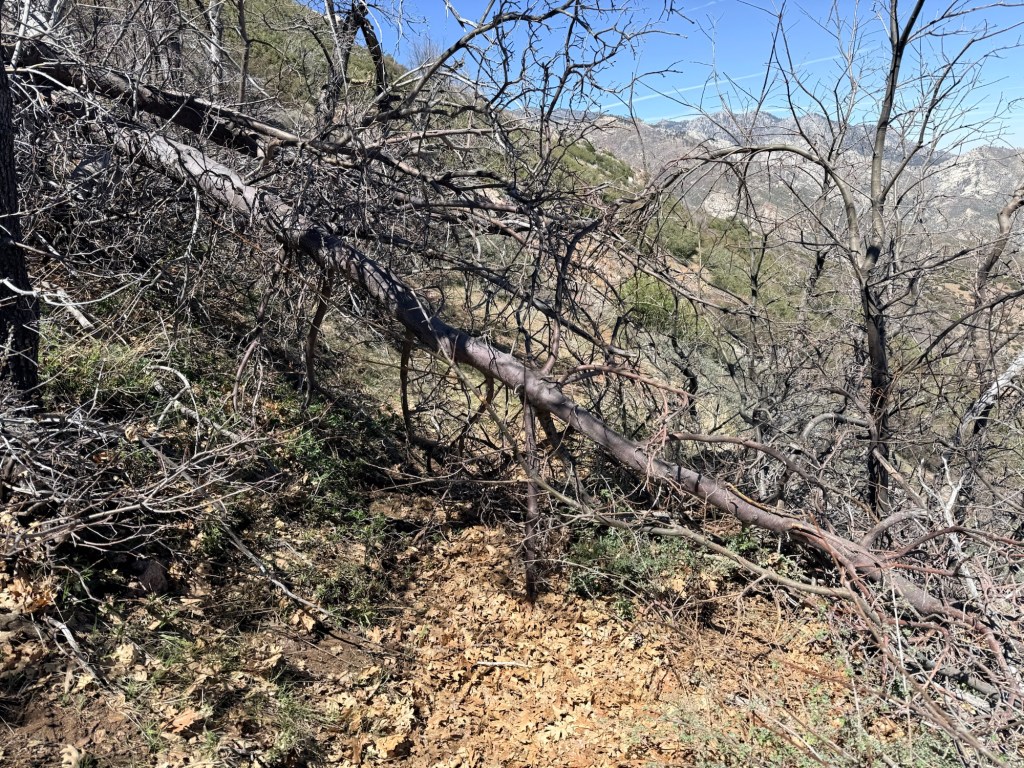
Another challenge throughout the day was the number of downed trees across the trail.
Some I could step over. Others required scrambling around or climbing over entirely. Each one broke my rhythm and slowed me down. It is one of those things that does not seem like a big deal at first, but after the tenth or twentieth tree, it starts to wear on you.
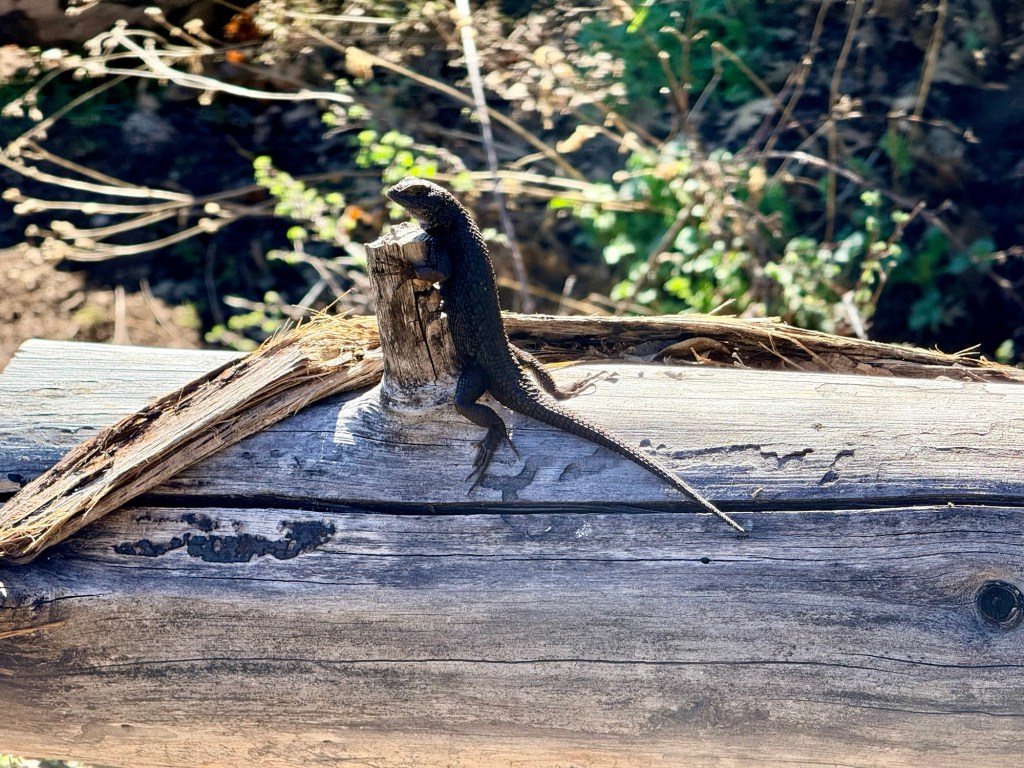
At one point, I heard something that immediately got my attention.
A rattlesnake.
The sound was much louder than I expected. Even with my headphones in, I heard it clearly. I stopped, located where it was coming from, and carefully moved past.
After I got by, I turned around to take a video.
For a brief moment, I saw its head peek out from behind a rock, then disappear again. That was enough.
It was a reminder that even when you feel alone out there, you are not.
By late afternoon, I started looking for a place to camp.
Eventually, I found a spot that seemed good enough and set up my tent. As I settled in, I realized I had used the last of my water to make ramen noodles.
Now I was completely out.
There is supposed to be a stream about one mile ahead, but I decided not to push it in the dark. Instead, I made a plan to reach it first thing in the morning.
Still, it is in the back of my mind.
If that water source is dry, I may have to bail off trail via Devil’s Slide into Idyllwild, which would mean a steep descent and a change of plans.
For now, there is nothing to do but wait until morning and hope the water is there.
Another small gamble on the trail.
Saturday, March 28, 2026 — Mile 176.5 to 193.0
The wind did not let up.
All night, it pushed against the tent, rattling the fabric and occasionally slapping it into my face. I probably got no more than two hours of sleep total, though at least it was not too cold, which made it more tolerable than previous nights.
Around 3:00 AM, I figured out a workaround.
I layered up my face scarf, hood, earplugs, and even wrapped an extra shirt around my head to block out both the noise and the sensation of the tent walls hitting me. It was not comfortable, but it helped just enough to get through the rest of the night.
By 6:00 AM, I got up, not because I wanted to, but because I had to.
Packing up in the wind was exactly as frustrating as expected. My tent and sleeping pad kept trying to take off, forcing me to constantly chase and pin things down while breaking camp.
The first priority of the day was water.
Thankfully, the stream one mile ahead was flowing, which meant I did not have to bail off trail to Idyllwild. I filtered about four liters, made a quick cup of coffee, and paired it with a protein bar for breakfast.
That alone felt like a win.
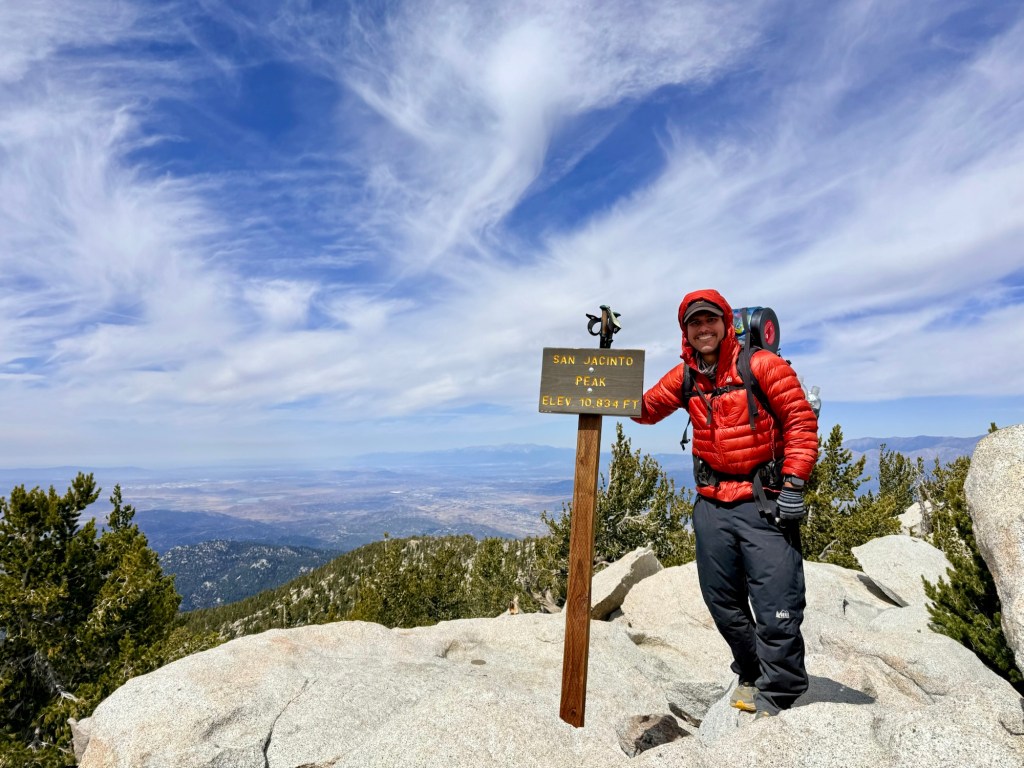
A few miles later, I reached the junction for the San Jacinto Peak Trail.
This is an alternate route from the main PCT, one that adds extra miles and elevation, but also leads to one of the most prominent summits in Southern California. I had already decided that if I had the chance, I wanted to hit as many major peaks as possible along the trail.
So I took the detour.
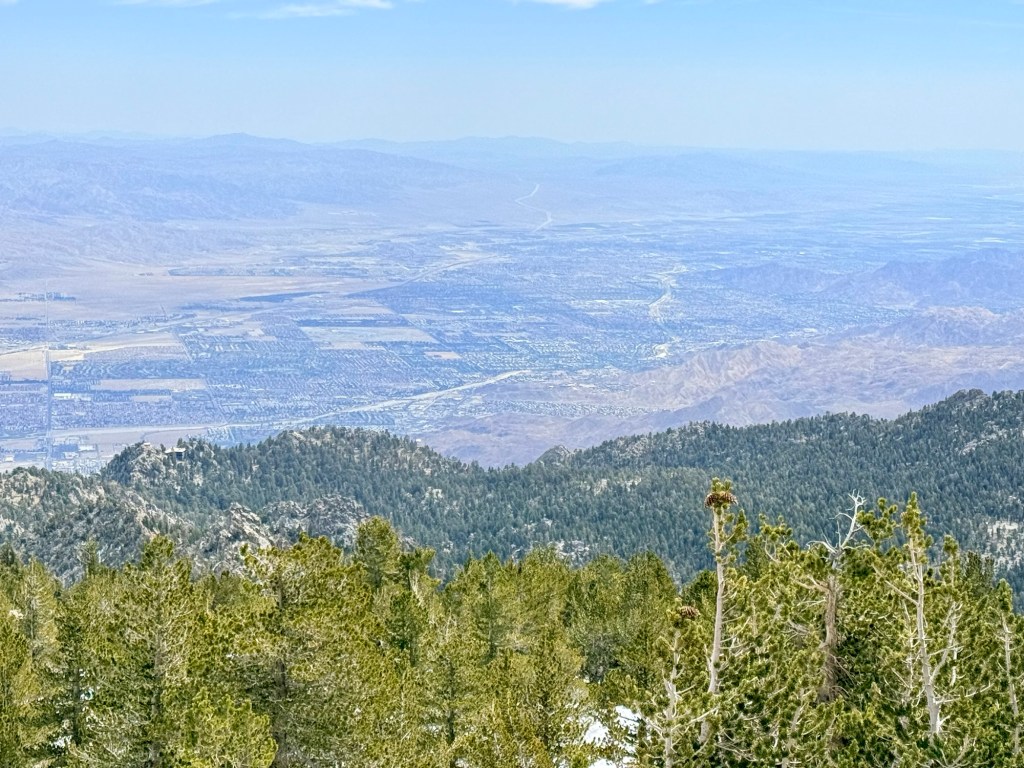
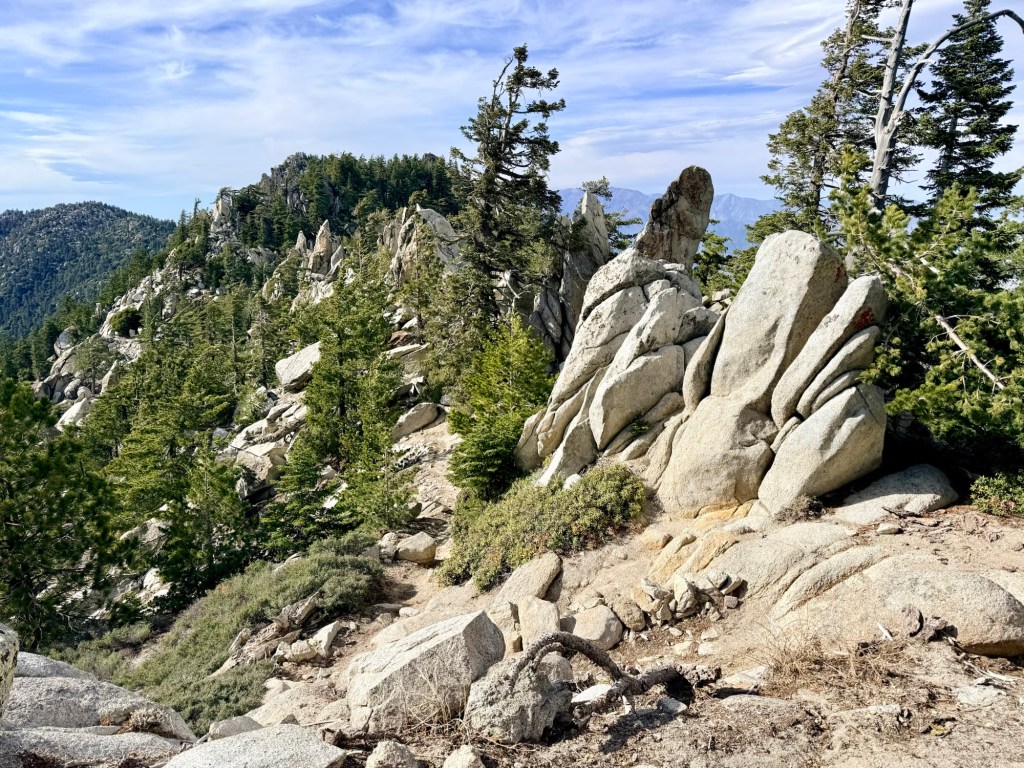
The climb up toward San Jacinto Peak was noticeably different from the lower desert terrain. As elevation increased, the environment shifted into a high alpine setting, with tall pine trees, granite rock formations, and cooler air. The views opened up in every direction, stretching across valleys and distant mountain ranges.
To my surprise, the trail was busy.
I must have passed around 50 day hikers making their way up and down the peak trail. After spending so much time hiking alone or with a small group of thru-hikers, it felt strange to suddenly be surrounded by so many people.
But it also gave me a boost.
Each time I passed a group, there was a quick exchange, where I was coming from, where I was headed. When I mentioned I was hiking the Pacific Crest Trail, the reactions were always the same.
Surprise. Curiosity. A bit of admiration.
And each time, it gave me a small surge of motivation.
At that moment, I was the only PCT hiker I knew of on that route today, which made the experience feel even more unique.
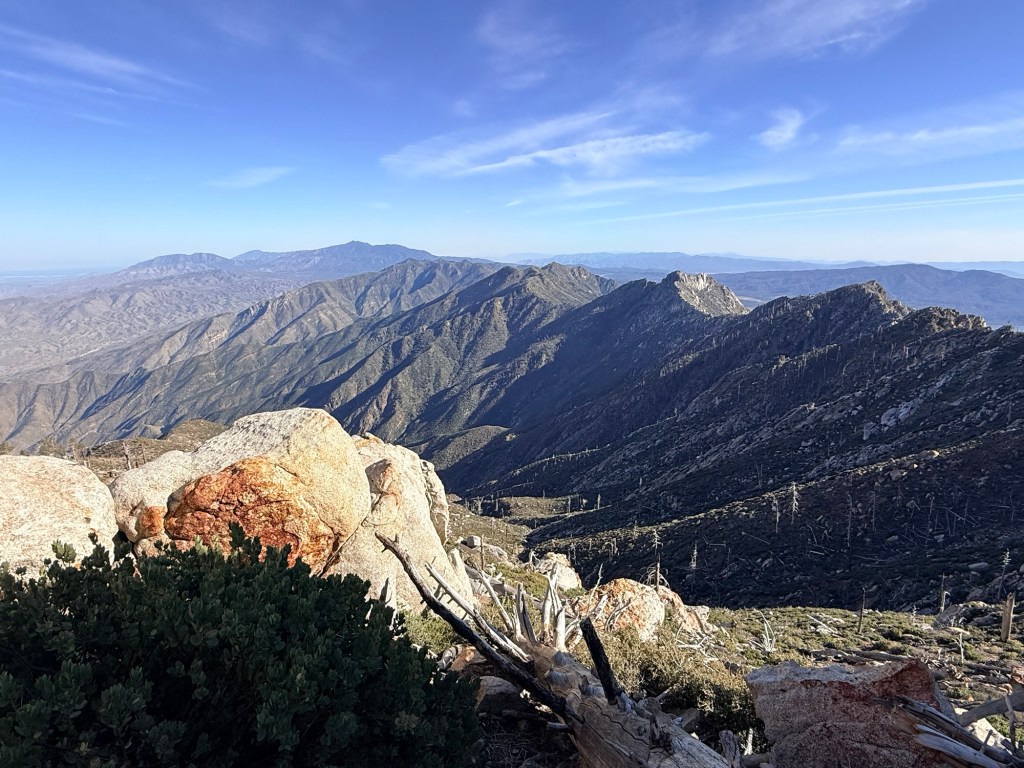
Eventually, I reached the summit of San Jacinto Peak.
The view was incredible. From the top, you can see vast stretches of Southern California, desert basins below, mountain ridgelines in the distance, and the sheer scale of the landscape you have been walking through.
I took some time there, photos, videos, just taking it in, before starting the descent.
It took about three miles to reconnect with the main PCT.
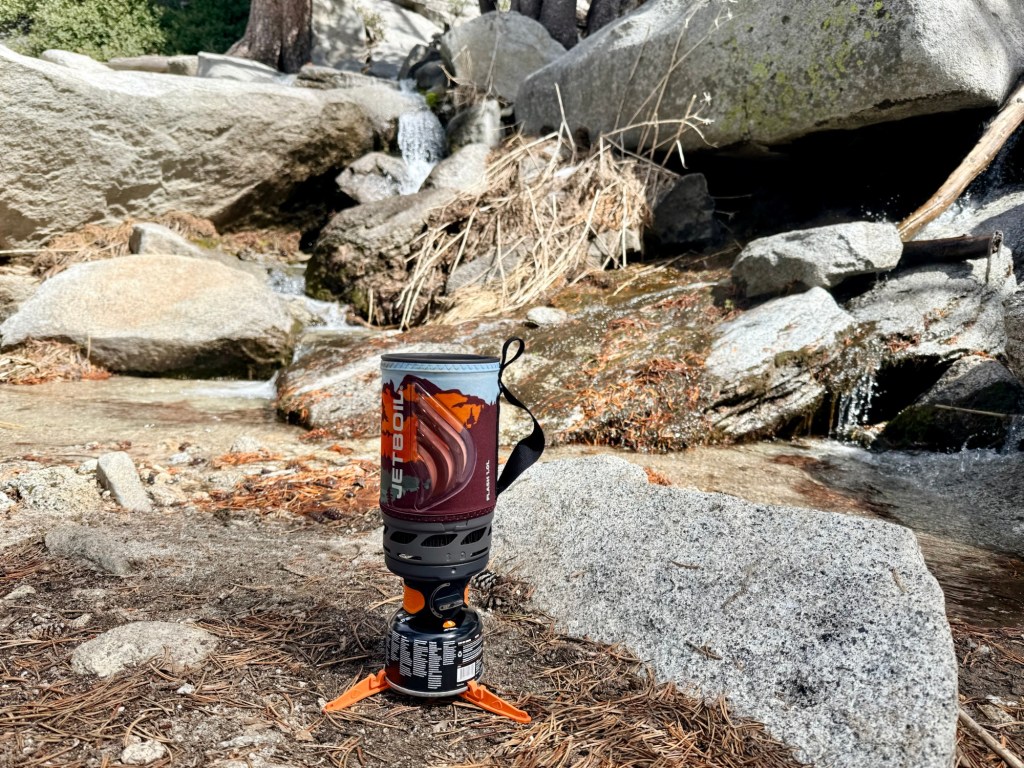
On the way down, I stopped at a small stream with a trickling waterfall, knowing it would be my last reliable water source for a while. With no water expected for the next 20+ miles, I took the opportunity to fully reset.
I filtered water, cooked, and cleaned everything.
Dinner came early.
A combination of ramen and mashed potatoes, which sounds questionable, but on the trail, it works.
With everything topped off, I continued hiking for another seven miles toward my planned campsite.
For the third day in a row, I was hiking solo.
By this point, I am starting to get used to it.
Physically, there is still one issue lingering.
After about 15 miles, my feet begin to hurt, specifically in the same area near where my toes meet the rest of my foot. It is not debilitating, but it is limiting. I can feel that I have more endurance in me, but my feet are the bottleneck.
I am hoping either I solve it soon or my feet simply adapt over time.
Because right now, they are the only thing holding me back from pushing further.
I reached camp as the day was winding down.
The site was solid, with natural windbreaks, which was a huge relief after the previous night. There were also two other hikers there, both friendly, which added a bit of comfort without feeling crowded.
For the first time in a while, I also had cell service, which felt like a small luxury.
Between the protection from the wind, a proper setup, and a long day behind me, I had a feeling this would be the best night of sleep in a while.
Sunday, March 29, 2026 — Mile 193 to 209.5
Sleep was better than the night before, but still not what I had hoped for.
This time, it was not the wind keeping me up. It was my feet. The throbbing pain would wake me up, and I would find myself tossing and turning, trying to find a position that did not aggravate them. I probably moved around enough to make some noise on my sleeping pad, and I would not be surprised if I woke up the hikers around me a few times.
I got up at 6:00 AM with the goal of starting right at sunrise.
By 6:40 AM, I was on the trail.
No coffee that morning.
I only had about 1.5 liters of water left, and the next reliable source was 13 miles away at a faucet, so I needed to conserve. I said goodbye to the other hikers and set off for my fourth straight day of solo hiking.
The terrain for the day was dominated by a long descent.
From around 6,700 feet down to about 1,300 feet, the trail dropped steadily through a series of endless switchbacks. For roughly 10 miles, I was winding my way down the mountain, looking out over the valley below.
At one point, I could see the road crossing in the distance.
It looked close.
But it never seemed to get any closer.
That kind of visual trick messes with your head. You feel like you should be there soon, but the trail keeps stretching out in front of you.
Mentally, the day started to drag.
I was getting bored of podcasts and music, which is not something I expected to happen this quickly. To break it up, I started making short phone calls to friends and family whenever I briefly had service.
That helped.
What did not help was the water situation.
I eventually ran out of water, and at that point I became hesitant to eat anything. Eating would just make me thirstier, so I limited myself to one protein bar for most of the morning and early afternoon.
When I finally reached the water faucet, I realized something surprising.
One of my water bottles, which I thought was empty, still had about one-third of a liter left.
That small amount felt like a gift.
Since I only had about four miles left, and the terrain ahead was mostly flat, I decided to just push through with what I had rather than deal with filtering the non-potable water at the faucet.
While I was there, I met three other hikers, and we ended up walking together toward Whitewater.
It was a nice change after several days of hiking solo.
At one point along the way, I saw my first full rattlesnake.
Not just hearing it this time, actually seeing it stretched out. It definitely made me pay closer attention to where I was stepping.
A little later, we came across something even better.
Trail magic.
Someone had left a cache of Gatorade, and I grabbed a blue one without hesitation. It was exactly what I needed after running low on water and pushing through the heat.
By the time we reached the road crossing at Whitewater, I was more than ready to be done for the day.
Paula met me there, and we celebrated in the best way possible.
First stop, plum shakes at Hadley Fruit Orchards.
Then a veggie sub from Jersey Mike’s.
And finally, beers at Coachella Valley Brewing Company.
After that, we headed back to Thousand Trails Palm Springs to settle in and get ready for another work week.
Another stretch of trail complete.


Leave a Reply