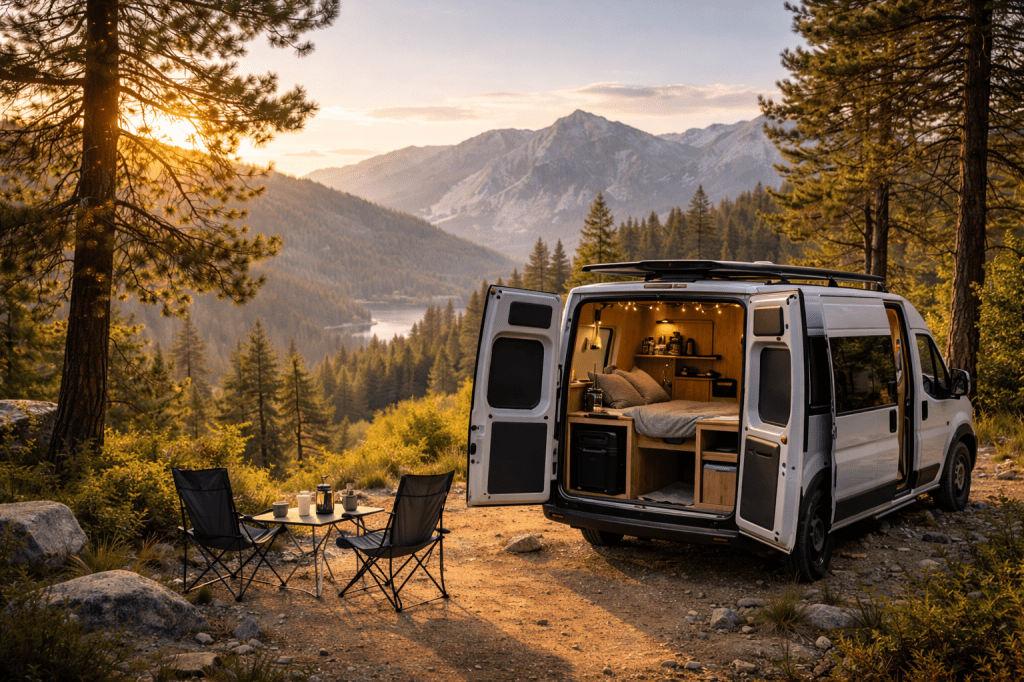
After preparing for life on the road and building your vehicle setup, the final stage of the journey begins: actually living the lifestyle.
This is the phase that attracts the most attention online. Photos of vans parked beside mountain lakes or along coastal cliffs make the experience look almost effortless. Sunsets, national parks, and scenic overlooks create a powerful sense of freedom that draws many people toward nomadic living.
But daily life on the road is more than a collection of beautiful landscapes.
It is a rhythm that combines exploration, logistics, work, and personal routines. Thriving on the road requires learning how to balance these elements so that travel remains sustainable rather than exhausting.
For many people, this is where the lifestyle becomes truly meaningful. The road stops feeling like a temporary adventure and begins to feel like home.
Finding Places to Stay
One of the most common questions people ask about vehicle living is simple:
Where do you sleep?
In reality, vehicle dwellers rely on a wide range of overnight options.
Public lands managed by agencies such as the Bureau of Land Management or the U.S. Forest Service often allow dispersed camping, where travelers can stay outside of traditional campgrounds. These areas provide access to some of the most beautiful and remote landscapes in the country.
Campgrounds and RV parks provide another option. While these locations typically charge a nightly fee, they often include amenities such as restrooms, showers, and water hookups.
Many travelers also use apps that help identify overnight parking locations, including rest areas, truck stops, and certain retail parking lots where overnight stays are permitted.
Over time, finding a place to sleep becomes second nature. Experienced nomads develop routines and learn which types of locations best match their comfort level and travel style.
Managing Daily Logistics
Living on the road means that simple tasks sometimes require more planning than they would in a traditional home.
Water must be refilled periodically. Waste systems must be emptied. Groceries require planning because supermarkets may not always be nearby.
Many travelers develop weekly routines that help manage these tasks.
For example, a typical week might include:
- Refilling water containers at campgrounds or public stations
- Shopping for groceries in nearby towns
- Doing laundry at laundromats
- Charging batteries or monitoring solar power levels
While these tasks might sound inconvenient, they often become part of a comfortable rhythm once you settle into the lifestyle.
Many travelers even find that these routines encourage them to slow down and become more intentional about how they spend their time.
Balancing Work and Travel
For many modern nomads, work remains an important part of life on the road.
Remote jobs, freelance work, and consulting allow people to maintain income while traveling. However, balancing productivity with exploration can be challenging.
When your surroundings include mountains, beaches, or national parks, it can be tempting to abandon your laptop and head outside.
Successful travelers often develop systems that protect both work time and travel time.
Some people set clear schedules, working in the mornings and exploring in the afternoons. Others dedicate certain days entirely to work while reserving other days for travel.
Travel speed also plays a role. Moving every day can quickly become exhausting, especially if you are maintaining a full-time workload. Many nomads prefer slow travel, staying in one location for several days or even weeks.
This approach allows them to maintain productivity while still enjoying the landscapes around them.
Staying Healthy on the Road
Health and wellness are important considerations when living in a vehicle.
The lifestyle can encourage physical activity. Hiking, walking, and outdoor exploration become natural parts of daily life.
However, maintaining healthy habits still requires effort.
Cooking simple meals rather than relying on fast food can improve both health and finances. Regular exercise helps offset long hours spent driving or working. Adequate sleep is also essential, especially when adjusting to new environments.
Mental health matters as well.
While many people enjoy solitude, long periods of isolation can become difficult for some travelers. Staying connected with friends and family, meeting other travelers, and occasionally spending time in towns or cities can help maintain balance.
The road offers freedom, but thriving requires paying attention to both physical and emotional well-being.
Community on the Road
Despite the independence of the lifestyle, vehicle dwelling is rarely a completely solitary experience.
Many travelers form friendships with other nomads they meet along the way. Campgrounds, public lands, and popular travel destinations often bring together people who share similar interests and lifestyles.
Online communities also help travelers connect.
Social media groups, travel forums, and camping apps allow nomads to exchange information about campsites, road conditions, and travel routes. These communities often provide valuable advice and support.
For some travelers, these connections become one of the most rewarding aspects of the lifestyle.
Even brief conversations with fellow travelers around a campfire can create a sense of belonging that feels unique to life on the road.
Adapting to Challenges
Like any lifestyle, vehicle dwelling includes challenges.
Weather can disrupt travel plans. Mechanical problems can appear unexpectedly. Internet connectivity may occasionally fail in remote areas.
Adapting to these situations is part of the learning process.
Many experienced travelers develop flexible mindsets that allow them to adjust plans when necessary. Instead of viewing challenges as setbacks, they treat them as part of the adventure.
Over time, these experiences build resilience and confidence.
What once seemed intimidating eventually becomes routine.
Slowing Down
One unexpected lesson many travelers discover is that constant movement is not always the most rewarding way to experience the road.
Early in their journeys, many nomads attempt to visit as many destinations as possible. They move frequently, chasing scenic locations and checking places off their lists.
Eventually, many discover the value of slowing down.
Staying longer in one location allows deeper exploration. You can hike multiple trails, visit nearby towns, and settle into a rhythm that feels more sustainable.
Slow travel often leads to richer experiences and a stronger connection to the places you visit.
The Freedom of the Open Road
What draws many people to this lifestyle is the sense of possibility that comes with it.
Each day presents new choices.
You can wake up beside a desert canyon, a forest lake, or a quiet mountain valley. You can change your route when something interesting appears on the map. You can stay longer in places that feel meaningful and leave when it feels right.
This flexibility creates a lifestyle that feels very different from traditional routines.
For many travelers, that difference becomes the most rewarding aspect of life on the road.
The Journey Continues
Living as a vehicle-dwelling nomad is not just about travel. It is about reshaping how you experience time, space, and freedom.
What begins as an experiment often evolves into a new perspective on life itself.
If you want to explore the full journey, from preparation to long-term nomadic living, you can find the complete guide in Vehicle-Dwelling Nomad: A Guide to Embracing Life and Work on the Open Road.
The book expands on these ideas with detailed guidance, personal experiences, and practical strategies for building a sustainable life on the road.
Because for many people, the road does not simply lead somewhere new.
It becomes a completely different way of living.
 Vehicle Dwelling Nomad
Leave a comment