Choosing the right storage solutions is crucial when building out your vehicle. Since space is limited, storage solutions should help you stay organized and make the most of every available inch. By optimizing storage, you can create a space that feels open, efficient, and comfortable. Below is a detailed guide to help you design storage solutions that fit your lifestyle and vehicle setup.
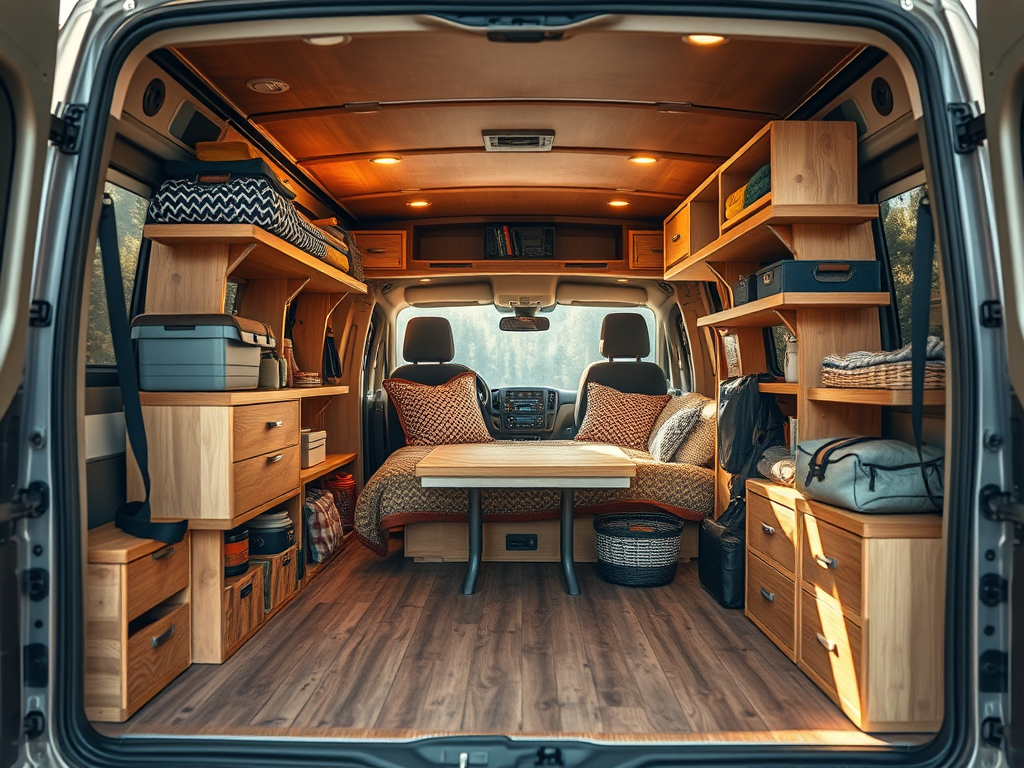
1) Optimize Vertical Space
When living in a vehicle, floor space is precious—so your best friend becomes everything above it. Vertical storage allows you to keep your gear accessible without creating clutter, and it’s one of the most effective ways to create a more spacious, livable environment inside a compact home on wheels.
Walls, doors, ceilings, and the backs of seats all become valuable real estate. Look for opportunities to use height to your advantage, especially in areas where traditional furniture isn’t practical.
Some effective vertical storage ideas include:
- Hanging storage pouches on doors, walls, or seatbacks for everyday essentials like books, tools, chargers, or toiletries.
- Cargo nets mounted to ceilings or above beds for lightweight gear like bedding, jackets, or soft bags.
- Magnetic knife strips and utensil racks to keep your kitchen tools organized and off the counter.
- Adhesive wall hooks or removable Command hooks to hang bags, hats, towels, or cookware.
- Stackable storage cubes or drawer units—even if they sit on the floor, they allow you to build up, not out.
- Overhead shelves or baskets installed along rooflines or window frames (great for storing paper goods, pantry items, or soft clothing).
The key is building vertically without compromising safety. Always secure any overhead bins or mounted gear to prevent shifting or falling while driving. Lightweight materials and bungee cords or velcro can help you create solutions that are both functional and road-ready.
By maximizing vertical storage, you create more breathing room in your living space—and keep the things you need right within reach without overwhelming your setup.
2) Utilize Hidden and Under-Floor Storage
In a vehicle-dwelling lifestyle, every nook and cranny holds potential. The secret to effective storage isn’t just in how much space you have—it’s in how creatively you use the space you didn’t even realize was there. Tapping into overlooked or hidden zones can dramatically increase your usable storage without adding clutter or taking away living space.
Start by identifying areas that often go unused:
- Under seats or bed platforms – Perfect for storing seasonal gear, shoes, tools, or extra pantry items in sliding bins or soft bags.
- Inside cabinet doors or drawer walls – Add slim racks, hooks, or pouches for smaller items like spices, toiletries, or cords.
- Wheel well cavities or side panels – Some rigs offer access to these hidden spaces—ideal for stashing extra water, emergency supplies, or repair kits.
- Footwells or behind front seats – Use flat bins, hanging organizers, or zippered pouches to store items without disrupting movement.
- Inside folding furniture – Benches, stools, and ottomans can double as storage boxes when built or selected thoughtfully.
One of the most effective tricks is to pair storage with function. Think: a pull-out drawer beneath your bed that also serves as your clothes dresser, or a storage ottoman that becomes a step stool or footrest. These kinds of hidden storage solutions help you stay organized without sacrificing usability.
When space is limited, it’s the unseen spaces that do the heavy lifting. Taking time to reimagine the underused parts of your vehicle can dramatically increase both functionality and comfort in your day-to-day routine.
3) Maximize Small Spaces
When every square inch counts, the key to staying organized isn’t having more—it’s making the most of what you already have. Maximizing small spaces means designing systems that use space efficiently, avoid clutter, and support your daily habits without constant reshuffling or frustration.
This approach is about function-first thinking—identifying how a space can be used in more than one way, trimming unnecessary bulk, and choosing gear that adapts to your lifestyle rather than crowding it.
Here are a few ways to make the most of small spaces in your rig:
- Use collapsible or foldable items like nesting bowls, collapsible dish tubs, or folding stools. These save cabinet space when not in use and are easy to tuck away.
- Downsize containers to match your usage. Instead of a full box of cereal, store just a few servings in a slim airtight jar. Keep only the amount you need for a week or two at a time.
- Divide drawers and cabinets using small containers, fabric bins, or zippered pouches to keep like items grouped together and avoid messy piles.
- Store vertically inside cabinets with tiered organizers or stacking bins, so you can see and reach everything without pulling it all out.
- Make use of corners and narrow gaps. Slim shelves, tension rods, or expandable racks can help turn awkward corners into usable storage.
When you treat your space like a puzzle—not a warehouse—you start to see opportunities everywhere. Even a six-inch gap can hold cooking gear, shoes, tech accessories, or pantry items—if you choose your containers carefully.
The goal isn’t to cram in more stuff—it’s to create flow. When your items have a thoughtful place and are easy to access, your entire space feels more open, livable, and calming—even when it’s small.
4) Storage for Daily Essentials vs. Long-Term Gear
Not all gear in your rig needs the same level of access. One of the most effective ways to streamline your space and reduce daily frustration is to separate what you use every day from what you only need once in a while. This simple distinction helps you organize your storage zones more intentionally and keeps frequently used items within arm’s reach—without digging through bins or moving things around constantly.
Start by identifying your daily essentials—the items you reach for regularly:
- Cooking tools and ingredients
- Clothing and toiletries
- Work accessories (laptop, chargers, notebooks, etc.)
- Lighting and power gear
- Hygiene supplies
- Frequently used outdoor gear (camp chairs, shoes, bug spray)
These should be stored in easily accessible areas:
- Front-facing drawers
- Hanging organizers on doors or walls
- Seat-back or bedside storage
- Countertop baskets or magnetic strips
- Small bins under benches or near the entry point
Meanwhile, your long-term gear—things you only use occasionally—can be tucked away in harder-to-reach areas:
- Seasonal clothing or gear
- Backup supplies (extra propane, water jugs, batteries)
- Repair kits and maintenance tools
- Off-season recreation gear (snow gear, climbing ropes, etc.)
- Overflow pantry or medical supplies
These items are perfect for under-bed bins, rooftop cargo bags, back-of-cab storage, or side compartments you don’t need to access often.
If you blur the lines between daily and occasional use, your space can quickly feel chaotic. But when you make this one organizing principle a core part of your setup, it becomes dramatically easier to keep things tidy—and to enjoy your space without feeling overwhelmed by your own belongings.
This simple shift transforms your rig from a storage puzzle into a truly livable home.
5) Use Soft Storage for Flexible Spaces
One of the smartest ways to maintain versatility in your rig is to incorporate soft storage solutions. Unlike rigid bins or hard-sided drawers, soft storage adapts to awkward spaces, shifts easily with your needs, and helps preserve your vehicle’s open, breathable feel.
Soft storage works especially well in flexible zones—places that may double as seating, sleeping areas, entryways, or open floors. These are spaces where bulky containers would get in the way, but soft options blend seamlessly and can be moved or stashed quickly.
Here are a few versatile soft storage options to consider:
- Zippered fabric bins or pouches – Great for organizing clothes, electronics, toiletries, or pantry goods. They compress flat when not in use and tuck easily under beds, in drawers, or in rooftop bags.
- Hanging shoe organizers or fabric caddies – Ideal for storing small items like socks, spices, kitchen tools, or hygiene supplies. Hang them from cabinet doors, wall hooks, or seat backs.
- Duffel bags or flexible backpacks – Perfect for storing long-term gear or bulky items like extra bedding, seasonal clothing, or recreational equipment. These are easier to mold into tight spaces than rigid tubs.
- Mesh bags or compression sacks – Useful for storing soft goods like towels, jackets, or laundry, while also minimizing bulk.
- Soft baskets or felt totes – These add a cozy touch while keeping daily-use items accessible without the clatter of hard plastic.
Soft storage also helps with noise reduction—something you’ll appreciate on bumpy roads or quiet nights. And because it’s often lighter in weight, it supports better fuel efficiency and overall ease of movement inside your vehicle.
Best of all, soft storage lets you stay flexible as your needs change. You can shift items around, repurpose a container, or rearrange zones without having to rebuild or reconfigure your entire setup. It’s one of the simplest upgrades that makes a huge difference in how your space feels and functions.
6) Outdoor Gear Storage
If you travel with bikes, hiking gear, chairs, tools, or other bulky equipment, outdoor storage can be a game-changer. Instead of cramming oversized or dirty items into your living space, keeping gear stored externally helps you stay organized, protect your interior, and free up valuable square footage for daily living.
The key is to create secure, weather-resistant, and easily accessible storage systems that keep your outdoor gear both protected and ready to grab when adventure calls.
Popular options for outdoor gear storage include:
- Rooftop cargo bags or boxes – Soft rooftop bags (like weatherproof duffel-style cargo carriers) are great for irregularly shaped gear or extra seasonal storage. Hard boxes provide better security and long-term weather protection.
- Hitch-mounted cargo carriers – These give you rear-mounted space to store heavy-duty bins, jerry cans, or large items like camp stoves or propane tanks.
- Side-mounted MOLLE panels or gear racks – Ideal for attaching shovels, recovery gear, water jugs, or traction boards, especially on overland vehicles or rugged builds.
- Tailgate or spare tire organizers – Useful for storing smaller outdoor essentials like tools, gloves, tow straps, or camp lanterns.
- Under-vehicle storage solutions – Some rigs allow for custom-built under-chassis boxes or slide-out compartments for keeping low-priority gear out of the way.
To make outdoor storage work well:
- Choose weatherproof containers or waterproof covers to protect against rain, dust, and sun damage.
- Use labeled, modular bins so you can quickly grab only what you need without sorting through everything.
- Secure everything tightly with ratchet straps, locking latches, or padlocks to prevent movement while driving or deter theft.
Organizing your outdoor gear effectively means you won’t need to bring muddy boots or heavy tools into your main living space—and you’ll be more likely to use your gear regularly when it’s easy to access.
Ultimately, good outdoor storage helps keep your interior space clean, calm, and comfortable, while making sure your adventures are always within reach.
7) Aesthetic and Personal Touches
Storage in a vehicle-dwelling lifestyle isn’t just about function—it’s also about how your space feels. When you’re living in a small space, even your storage solutions contribute to the overall vibe of your home. That’s why it’s worth choosing options that are not only practical but also visually calming, cohesive, and aligned with your personal style.
Creating a warm, personalized space doesn’t require fancy materials or a design background—it simply means being intentional about how your storage looks, feels, and integrates with the rest of your rig.
Here are a few ways to add aesthetic and personal touches to your storage:
- Choose natural or neutral tones for storage bins, pouches, and organizers. Earthy fabrics, woven baskets, or soft grays and tans help keep your space feeling grounded and less cluttered.
- Use matching or coordinated containers to create a cohesive, streamlined look—even if everything inside is wildly different.
- Incorporate texture and softness by mixing in fabric baskets, felt organizers, or lightweight wood accents instead of using only hard plastics.
- Add decorative functionality. Hang a canvas pocket organizer with hand-stitched labels, or use vintage tins or jars for storing small kitchen or craft supplies.
- Tuck in meaningful items. Photos, postcards, small artwork, or a favorite blanket can be stored in ways that still add visual warmth and personality.
Even in a minimalist setup, there’s room for beauty. When your storage solutions are thoughtfully chosen, they double as design elements—and help make your vehicle feel like a cozy, intentional home rather than just a mobile storage unit.
You don’t need much to make your space feel inspiring. A few soft materials, personal details, and design-conscious choices go a long way toward creating a rig that feels peaceful, inviting, and uniquely yours.

Resources about Storage
- DIY Storage Tutorials and Build Inspiration
- FarOutRide’s Van Build Storage Ideas – A detailed DIY guide with creative storage hacks for small spaces, including hidden compartments and under-bed storage solutions.
- Gnomad Home Van Storage Guide – Offers tutorials for building custom storage spaces and features insights into maximizing vertical and overhead storage.
- YouTube: Tiny Home Tours – Features walkthroughs of converted vans, buses, and RVs with innovative storage solutions for kitchens, bedrooms, and bathrooms.
- Custom Van Build Companies with Storage Innovations
- VanDOit – Known for modular, customizable van builds with built-in storage compartments, slide-out drawers, and underfloor bins.
- Outside Van – Specializes in custom adventure van builds that incorporate unique gear garages and overhead storage systems.
- Sportsmobile – Offers campervan conversions with extensive storage features, including drop-down cabinets and hidden drawers.
- Campervan and Overland Forums
- Expedition Portal Storage Solutions Forum – A community where overlanders share their storage hacks for tools, cooking equipment, and bulky gear.
- Reddit: r/VanLife – A subreddit where vehicle dwellers share photos, recommendations, and tips for keeping their space organized.
- Skoolie.net Forums – For those converting larger vehicles like buses, this forum offers creative ideas for maximizing interior space.
- Build Planning Tools and Storage Layout Inspiration
- Pinterest – Search “van storage solutions” or “RV interior ideas” to find thousands of layout examples, storage product recommendations, and DIY plans.
- SketchUp (3D Design Software) – A free design tool for planning the interior layout of your vehicle, helping you visualize how to fit your storage compartments efficiently.
- RoomSketcher – An easy-to-use tool for creating floor plans and testing different storage placements in your build.

Product Recommendations
Hanging Organizers
Perfect for storing toiletries, kitchen tools, or small accessories on cabinet doors, walls, or seat backs.
Collapsible Storage Bins
Durable, neutral-toned, and easy to fold flat when not in use—great for organizing clothing or gear.
Under-Bed or Seat Storage
Low-profile, stackable storage box ideal for tucking under bed platforms or benches.
Rooftop Cargo Storage
Weatherproof external storage for seasonal gear, extra clothes, or camping equipment.
Compression Storage Bags
Ideal for packing away seasonal clothing, bedding, or soft goods in a compact and protected format.
Foldable Storage Ottoman
Doubles as seating and hidden storage—perfect for storing bulky items like blankets or shoes.
8. Cargo Net Storage Organizer
Mounts to your ceiling and holds jackets, blankets, or soft items without cluttering floor space.
Stackable Drawer System
Clear drawers make it easy to find what you need—great for clothes, tools, or kitchen supplies.
 Vehicle Dwelling Nomad
Leave a comment