Contents
- Introduction
- Start with a Vision for Your New Lifestyle
- Take Inventory of What You Own
- Sort Items into “Keep,” “Donate/Sell,” and “Discard”
- Evaluate Clothing and Wardrobe
- Simplify Kitchen Supplies
- Downsize Sentimental Items Thoughtfully
- Use Space-Saving Storage Solutions
- Digitize Paperwork and Entertainment
- Declutter Regularly
- Create a Storage Safety Plan
- Conclusion
1. Introduction
One of the biggest adjustments to life on the road is transitioning from a traditional home to a much smaller space. Downsizing and decluttering are essential steps to create a functional and comfortable living environment in your motorhome. Letting go of unnecessary items may seem overwhelming at first, but it can be an empowering process that helps you focus on what truly matters. In this post, I’ll walk you through how to downsize effectively, decide what to keep, and make the most of your space in your new home on wheels.
2. Start with a Vision for Your New Lifestyle
Before you begin downsizing, take some time to visualize your new life on the road. Consider the following:
- What activities are most important to you? (e.g., cooking, hiking, working remotely)
- What comforts are non-negotiable? (e.g., a cozy bed, good coffee, specific hobby gear)
- What will your daily routine look like?
By identifying your priorities, you can focus on keeping items that support your lifestyle and let go of those that don’t.
3. Take Inventory of What You Own
Create a list or walk through your home room by room and note everything you own. Categorize your items into groups such as clothing, kitchen supplies, furniture, electronics, and sentimental items. This will give you a clearer picture of how much you have and where you can start trimming down.
4. Sort Items into “Keep,” “Donate/Sell,” and “Discard”
Use the “three-pile method” to help with decision-making:
- Keep: Items that are essential or bring you joy and fit your new lifestyle.
- Donate/Sell: Items you no longer need but are in good condition. Consider holding a yard sale or selling on platforms like Facebook Marketplace or eBay.
- Discard: Broken, worn-out, or unusable items that can be thrown away or recycled.
Tip: Be realistic—if an item hasn’t been used in the last year, it’s likely not essential for your new lifestyle.
5. Evaluate Clothing and Wardrobe
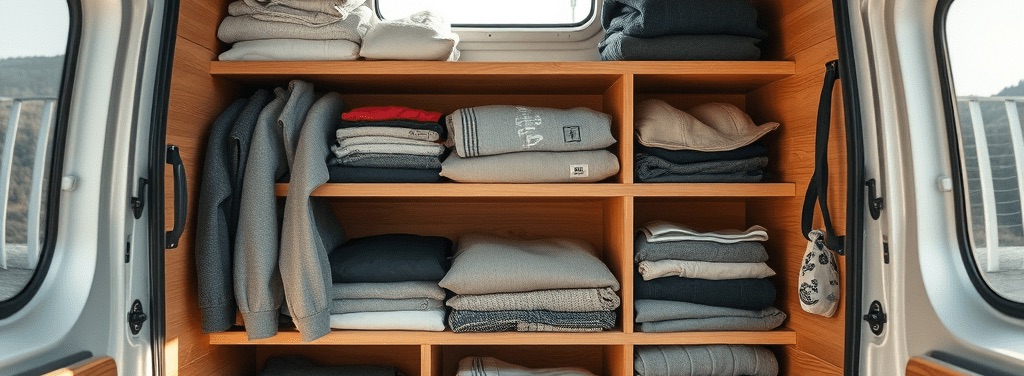
Space is limited in a vehicle, so it’s important to create a capsule wardrobe of versatile, seasonally appropriate clothing. Here’s how:
- Focus on Layers: Instead of bulky items, pack lightweight layers that can be mixed and matched.
- Limit “Just in Case” Items: Only bring clothes you wear regularly and avoid packing for rare occasions.
- Invest in Multipurpose Items: Consider clothes that serve multiple purposes, such as jackets with removable liners or hiking pants that double as casual wear.
- Rotate Seasonally: If possible, store off-season clothing in bins or consider swapping clothes when you visit family or return to storage units.
6. Simplify Kitchen Supplies
Vehicle kitchens are typically much smaller than traditional kitchens, so keep only essential items:
- Stick to Multi-Use Items: Opt for versatile cookware like cast-iron skillets, collapsible bowls, and stackable containers.
- Avoid Duplicates: You likely don’t need multiple sets of dishes, utensils, or mugs. Aim for one set per person with a few spares.
- Plan Meals: Think about the types of meals you’ll cook on the road and pack accordingly. If you don’t bake often, for example, you can skip bringing a bulky stand mixer or baking sheets.
7. Downsize Sentimental Items Thoughtfully
Sentimental items can be the hardest to part with, but it’s important to be selective about what you bring on the road:
- Digitize Keepsakes: Scan photos, letters, and important documents to reduce paper clutter.
- Keep a Few Small Mementos: Limit yourself to a small box or a few meaningful keepsakes that bring joy.
- Share Family Heirlooms: Consider giving heirlooms to family members who will appreciate them rather than storing them.
Tip: If you struggle to let go of sentimental items, ask yourself if the memory connected to the item can live on without the physical object.
8. Use Space-Saving Storage Solutions
Once you’ve downsized, it’s time to organize your remaining items efficiently. Here are some storage solutions to maximize your space:
- Collapsible and Nesting Items: Use collapsible bins, foldable kitchenware, and nesting bowls to save space.
- Overhead Storage: Install storage nets or shelves to use vertical space for lighter items like clothes and blankets.
- Over-roof Storage: Install waterproof cargo containers or bags on the roof of your vehicle for items that you don’t need quick access to such as camping equipment.
- Drawer Organizers: Keep small items like utensils, toiletries, and tools neatly contained with dividers and bins.
- Under-Bed Storage: Use the space beneath your bed for storing bulkier items like out-of-season clothes.
9. Digitize Paperwork and Entertainment
Reduce clutter by going digital:
- Scan Important Documents: Keep digital copies of insurance policies, medical records, and travel plans. Store them securely in cloud storage.
- Go Paperless: Avoid bringing excessive books, magazines, or files. Instead, use eBooks, audiobooks, and streaming services for entertainment.
10. Declutter Regularly
Even after your initial downsizing, it’s important to continue decluttering:
- Monthly Check-Ins: Regularly assess whether you’re still using everything you packed. If something hasn’t been used in months, consider donating or discarding it.
- One-In, One-Out Rule: For every new item you bring into your vehicle, remove an old item to maintain balance.
- Avoid Impulse Purchases: Be mindful of what you buy on the road to avoid accumulating unnecessary clutter.
11. Create a Storage Safety Plan
If you can’t bring everything you own, consider creating a plan for long-term storage:
- Rent a Storage Unit: Choose a small, climate-controlled unit to store furniture, heirlooms, or seasonal gear.
- Ask Family or Friends: If possible, ask loved ones to store a few boxes or key items.
- Revisit Storage Regularly: Periodically reassess your stored belongings to ensure you’re only keeping what’s important.
12. Conclusion
Downsizing and decluttering for full-time vehicle living may seem daunting, but it’s an opportunity to simplify your life and focus on what truly matters. By keeping only the essentials and letting go of excess, you’ll create a space that’s organized, functional, and uniquely yours. Remember, this process is about gaining freedom, not losing things—every item you let go of makes room for more experiences, adventures, and memories on the road. With thoughtful planning and a willingness to adapt, you’ll find that living with less can bring you so much more.
 Vehicle Dwelling Nomad
Leave a comment