Contents
- Introduction
- Define Your Needs and Priorities
- Create a Budget and Timeline
- Plan the Layout
- Choose Insulation and Climate Control
- Power Systems: Off-Grid Capabilities
- Water and Plumbing
- Kitchen Setup
- Furniture and Storage Solutions
- Safety and Security Features
- DIY vs. Professional Build
- Testing and Fine-Tuning
- Final Thoughts
1. Introduction
Whether you’re converting a van, truck, SUV, or upgrading a motorhome, building out your vehicle is an exciting step toward creating your perfect home on wheels. A well-thought-out build can maximize comfort, functionality, and storage while making your travels more enjoyable. However, it’s also a process that requires careful planning, budgeting, and creativity. Whether you’re tackling a DIY project or opting for a professional build, this post will walk you through the essential steps and key considerations to help you design and build a space that fits your lifestyle and needs.
2. Define Your Needs and Priorities
Before you start building, ask yourself what’s most important for your daily life. Consider the following questions:
- Will you be working remotely? (If so, you may need a desk or workspace.)
- Do you need a full kitchen, or will a simple camp stove suffice?
- How much off-grid capability do you want? (e.g., solar power, large water tanks)
- How much storage space do you need for clothes, food, and gear?
Your answers will help you prioritize your build and make key design decisions.
3. Create a Budget and Timeline
Building out your vehicle can range from a few hundred dollars for simple upgrades to tens of thousands for a professional build. Here’s how to budget effectively:
- Set a Total Budget: Determine how much you’re willing to spend, including unexpected expenses.
- Prioritize Expenses: Allocate more of your budget to critical components like insulation, power systems, and safety features.
- Account for Labor Costs: If you’re hiring professionals for parts of the build, factor in labor fees.
- Allow for Delays: DIY projects often take longer than expected, so be realistic about your timeline.
4. Plan the Layout
Your layout will determine how functional your space is, so think about how you’ll use the space every day:
- Sleeping Area: Decide whether you prefer a fixed bed, a foldable setup, or a convertible couch.
- Kitchen: If you plan to cook often, a designated cooking area with a sink and countertop is helpful.
- Storage: Incorporate cabinets, drawers, and overhead compartments for organized storage.
- Workspace: If you need a desk, consider fold-out tables or pull-out drawers to save space.
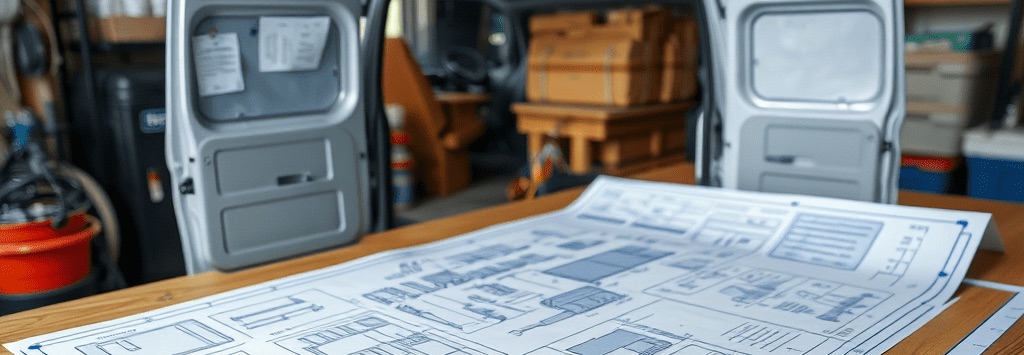
Tip: Use online van-building tools or graph paper to sketch out your ideal layout before making any purchases or cuts.
5. Choose Insulation and Climate Control
Insulation is key to regulating the temperature inside your vehicle, especially if you plan to travel in extreme weather. Here are common options:
- Foam Board Insulation: Lightweight and effective for walls, floors, and ceilings.
- Reflectix: Great for window covers and minimizing heat gain in hot climates.
- Sheep’s Wool or Thinsulate: Excellent for soundproofing and temperature regulation.
For climate control, consider adding a vent fan for airflow and a portable heater for colder months. Some setups also include air conditioning units powered by solar or external power hookups.
6. Power Systems: Off-Grid Capabilities
A reliable power system is essential for charging devices, running appliances, and staying off-grid longer. Here’s what to consider:
- Solar Panels: A popular choice for generating renewable energy. Determine how many watts you’ll need based on your power usage.
- Battery Bank: Deep-cycle batteries store the energy your solar panels generate. Lithium batteries are pricier but more efficient and longer-lasting.
- Inverter: Converts stored DC power (from batteries) into AC power to run household appliances.
- Backup Power: Consider a portable generator or portable power station for additional energy security.
Tip: Calculate your daily power needs (laptops, fans, lights, etc.) to size your system properly.
7. Water and Plumbing
Water management is crucial for staying hydrated, cooking, and cleaning. Here’s what you’ll need:
- Water Tanks: Depending on your space, you can install a built-in water tank or use portable jugs.
- Pump System: A simple 12V pump can supply running water to your sink. For smaller setups, a gravity-fed system or hand pump can work.
- Gray Water Tank: Collect wastewater from your sink in a gray water tank to dispose of responsibly.
- Shower Solutions: If you want a shower, consider a portable solar shower or a built-in system with a tankless water heater.
8. Kitchen Setup
Design your kitchen with your cooking habits in mind:
- Cooktop Options: Choose between propane stoves, induction cooktops, or portable camp stoves.
- Refrigeration: Decide between a portable 12V fridge, cooler, or built-in fridge/freezer combo.
- Storage: Include drawers and cabinets for dry food, utensils, and pots/pans.
9. Furniture and Storage Solutions
Maximizing storage while keeping your space functional is key. Here are some creative storage ideas:
- Under-Bed Storage: Store bulky items like outdoor gear or water tanks under a raised bed platform.
- Overhead Cabinets: Utilize vertical space for lighter items like clothes and toiletries.
- Multi-Functional Furniture: Consider furniture that serves multiple purposes, like a bed that converts into a seating area.
- Hidden Storage: Add storage compartments in unused spaces, such as under seats or in wheel well covers.
10. Safety and Security Features
Your safety on the road is essential. Add the following features to protect yourself and your belongings:
- Smoke and Carbon Monoxide Detectors: A must-have for vehicles with propane or heating systems.
- Fire Extinguisher: Keep a fire extinguisher within easy reach.
- First Aid Kit: Stock a comprehensive first aid kit for emergencies.
- Security System: Consider installing motion-detecting lights, door/window alarms, or a surveillance camera for added peace of mind.
11. DIY vs. Professional Build
Decide whether you want to build out your vehicle yourself or hire professionals:
- DIY Build: More affordable and customizable, but requires time, tools, and technical skills. Great for those who enjoy hands-on projects and learning new skills.
- Professional Build: Ideal for those who prefer a turn-key solution or don’t have the time or expertise to do it themselves. Professional builds often come with warranties and high-quality craftsmanship but can be expensive.
Tip: You can also mix both approaches—handle simpler tasks yourself (like insulation and painting) while hiring pros for electrical work or plumbing.
12. Testing and Fine-Tuning
Before hitting the road full-time, take a few short trips to test your build. Pay attention to what works well and what needs improvement:
- Is the bed comfortable enough?
- Do you have easy access to essential items?
- Does your power system support your daily needs?
Making adjustments early can save you from headaches later.
13.Final Thoughts
Building out your vehicle is your chance to design a space that reflects your needs, style, and lifestyle goals. Whether you’re aiming for a budget-friendly DIY build or a professional, high-end setup, thoughtful planning and prioritization are key. Remember, it doesn’t have to be perfect from day one—your build can evolve as you discover what works best for you. With the right setup, your vehicle will become more than just transportation—it will be your home, your workspace, and your gateway to adventure.
 Vehicle Dwelling Nomad
Leave a comment